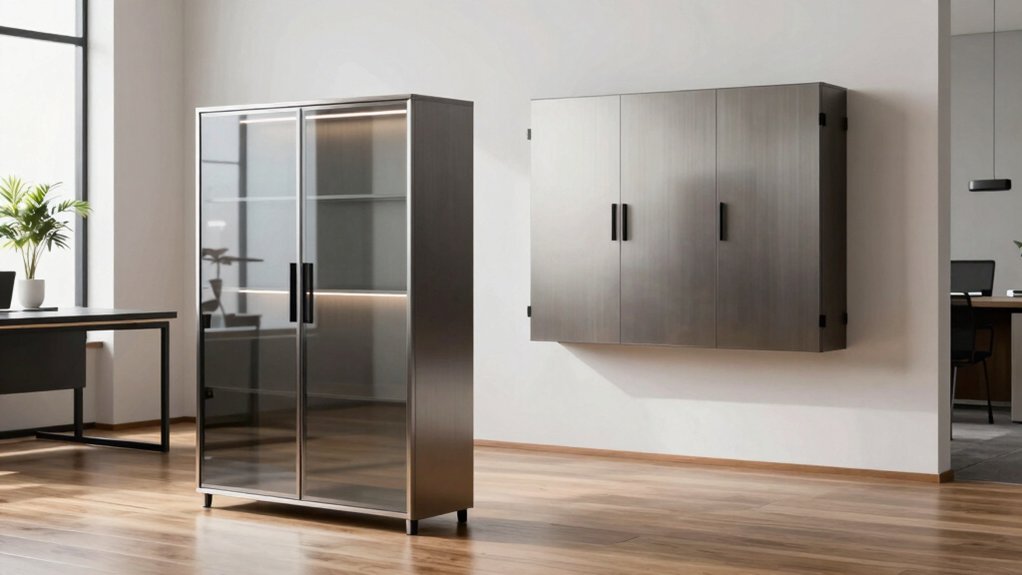
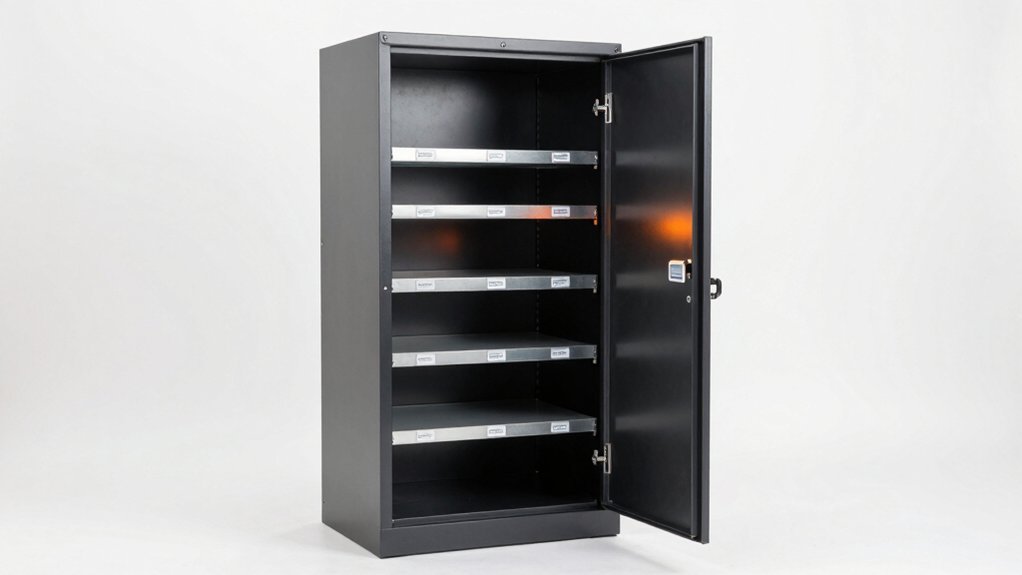
You’ll see a plastic storage cabinet fade in sunlight because UV‑B photons break polymer chains and bleach pigments, making the material brittle and discoloring the color. Even if the cabinet has UV‑stabilizers, they only protect for about five to six years before the fade becomes noticeable, and visible light accounts for roughly 90 % of the color loss. Heat from infrared also speeds up brittleness. Knowing the resin type, UV‑inhibitor content, and proper maintenance can keep it looking good much longer.
Why Do Plastic Cabinets Fade in the Sun?
Because sunlight contains ultraviolet (UV) radiation, plastic cabinets exposed outdoors begin to degrade almost immediately. UV photons break polymer chains, dry out surface finishes, and trigger color degradation. Visible light adds to pigment breakdown, while infrared heat dries the material, accelerating brittleness and fading. You’ll see 40 % of the overall fade attributed to UV, but visible light accounts for roughly 90 % of total color loss. Prolonged exposure warps, cracks, and softens the plastic, especially when humidity or pollutants are present. The combined effect of UV, visible, and infrared energy destabilizes dyes, leading to uneven hue shifts and loss of vibrancy. Understanding these mechanisms helps you select protective measures before the cabinet’s appearance deteriorates. Limited durability can also become a concern when the material is repeatedly exposed to harsh sunlight. The risk of UV‑induced polymer breakdown increases with thinner wall thicknesses found in lower‑grade cabinets. Plastic storage cabinets also offer lightweight design that makes them easy to move for cleaning or rearranging.
How UV‑Resistant Resin Keeps Fade‑Resistant Outdoor Cabinets Stable
When sunlight hits a cabinet made of UV‑resistant HDPE resin, the polymer’s built‑in UV inhibitors absorb and dissipate harmful rays, preventing the pigment molecules from breaking down. The resin’s color‑through formulation guarantees the hue stays uniform even as the surface wears. Multi‑wall panels add structural rigidity while the resin coating seals micro‑cracks, blocking moisture that could accelerate degradation. Because the material resists warping, cracking, and UV‑induced fading, manufacturers can offer extended warranty terms—often ten years—covering color loss and structural integrity. You’ll notice that marine‑grade HDPE maintains its original appearance through harsh sun, salt spray, and temperature swings, delivering reliable, fade‑resistant performance for outdoor storage. Proper sealing also protects against moisture intrusion, extending the cabinet’s lifespan. Powder‑coated steel provides an alternative finish with comparable UV resistance for high‑traffic indoor environments. Selecting cabinets with reinforced joints ensures added durability against wind‑driven debris.

Dimensions & Size: Exterior measures 25 5/8" x 18 7/8" x 69 3/8", with interior shelf dimensions of 17.65" width x 13.31" depth, providing ample storage space for various items.

Compact 30‑Gallon Outdoor Storage: Ideal size for storing patio cushions, outdoor décor, gardening tools, and other backyard essentials while keeping everything close at hand.

Latest Unique Design -- ZZM implements the latest design trends- diamond patterns combined with interlocking linework. convenient and easy to open, the beautiful design and closed storage space with classified storage create a clean and fresh home.
Test Results for Patiowell, Suncast & Wayfair Fade‑Resistant Cabinets
How do the latest field tests stack up for Patiowell, Suncast, and Wayfair’s fade‑resistant cabinets? You’ll see Patiowell’s heavy‑duty HDPE resin holds color after months of direct sun, outlasting Suncast’s multi‑wall panels in heat‑stress trials. Wayfair’s Suncast‑based model scores 4.6–4.7/5 stars for durability, with no reported fading. Price testing shows overlapping ranges: Suncast $300‑$2700, Patiowell $300‑$2500, so cost isn’t a differentiator. Warranty comparison favors Patiowell’s lifetime guarantee versus Suncast’s five‑to‑ten‑year coverage for UV damage. All three resist mold, rust, and salt air, but Patiowell’s material stability gives it the edge in extreme sun exposure, confirming its claim of superior fade resistance. The shed’s dry interior after heavy rain demonstrates its robust construction. Selecting a material with high UV resistance is crucial for long‑term color retention. Proper load capacity planning ensures the cabinet can hold intended items without sagging. UV‑stabilized polymers further enhance color longevity under intense sunlight.
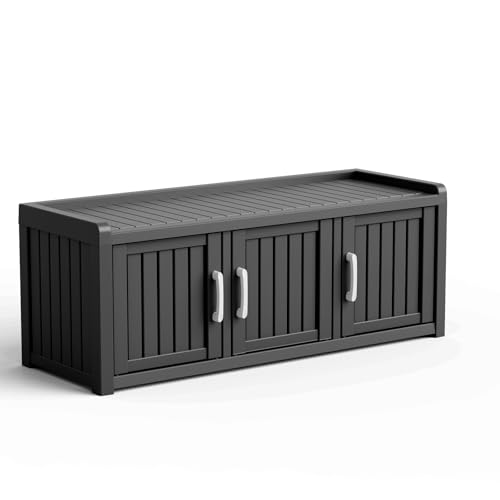
👢Durable Weatherproof Shoe Storage Cabinet: Crafted from eco-friendly resin and a sturdy frame, the bench is weather-resistant, wind- and water-proof, and fade-proof—perfect for outdoor or porch use. The resin surface wipes clean in seconds and naturally repels dust, cutting long-term upkeep to a minimum
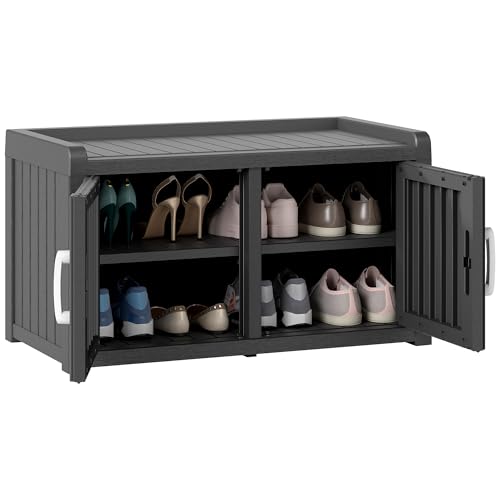
All-Weather Durability: Constructed from super-strong, waterproof resin, this cabinet withstands rain, humidity, UV rays, and everyday impacts. Your belongings stay completely dry and protected, even when placed outdoors near your door. Built for years of reliable, weather-resistant use.

Generous Storage Capacity - With spacious interior dimensions of 30"D x 14.7"Wx 14.1"H, this shoe storage bench effortlessly organizes up to 8 pairs of shoes. Adjustable shelves accommodate everything, making it the perfect storage solution for families and individuals alike.
Which Fade‑Resistant Cabinet Fits My Sun Exposure?
If your patio gets full‑day sun, choose a cabinet built with UV‑protected HDPE or PP resin—materials that block UV rays and keep color from fading. For intense sunlight placement, prioritize Patiowell or Tractor Supply models; they embed UV inhibitors directly into the polymer, delivering a high durability rating and resisting cracking. Suncast and Keter resin cabinets also meet this criterion, offering weatherproof finishes that retain hue for 4‑5 years outdoors. When your exposure is moderate, Wayfair’s horizontal units provide adequate protection with a slightly lower durability rating but still meet fade‑resistance standards. Match capacity to space—25 cu ft for compact patios, 50 cu ft for larger areas—while ensuring the cabinet’s UV‑protected resin aligns with your sun exposure level. Resin cabinets are known for their long‑term durability and color retention. Load capacity should be considered to prevent over‑loading and maintain structural integrity. Proper mounting on a wall can also free floor space, further enhancing the area’s usability. In industrial settings, metal storage cabinets provide fire‑resistant protection for hazardous materials.

61 Cu. Ft. Massive Capacity: Measuring 55.9" W x 26.37" D x 69.29" H, this oversized resin shed provides ample space to store lawn mowers, garden tools, bicycles, pool accessories, and outdoor furniture cushions, keeping your backyard clutter-free.

【Spacious Storage Space】: Hide messy items easily! This large outdoor storage box is ideal for outdoor toy storage. As a versatile choice among deck boxes, it acts as a functional outdoor toy box to keep your outdoor and indoor space neat

【Spacious Storage Space】: Hide messy items easily! This large outdoor storage box is ideal for outdoor toy storage. As a versatile choice among deck boxes, it acts as a functional outdoor toy box to keep your outdoor and indoor space neat
Maintenance Tips to Preserve Fade‑Resistance
Because UV rays and temperature swings can quickly degrade plastic cabinets, you should combine strategic placement with regular upkeep to preserve fade‑resistance. Begin with seasonal placement: locate cabinets away from windows, south‑facing walls, and direct sun, using shaded corners or UV‑protective covers when necessary. Maintain temperature control by keeping indoor climate moderate, avoiding extreme heat or cold that stresses the plastic. Clean monthly with mild soap and water, then dry thoroughly to prevent moisture buildup. Inspect every three to six months for early discoloration or warping, and document any changes. Avoid overstuffing to reduce structural stress, and treat stains promptly with a non‑abrasive baking‑soda paste. These concise actions sustain the cabinet’s fade‑resistance without additional material upgrades. Consider the impact of material composition on how heat can cause warping over time. Regularly check for loose hardware to prevent stress points that could accelerate fading. Choose a lock with high key control to ensure long‑term security and durability.

🎮【CHECK YOUR ARCADE SIZE】Measures 27"D x 20"W x 57"H. Measure the widest point of the control deck, cabinet depth and total height before ordering. Designed for select 3/4-size upright arcade cabinets.

M3X12 Stainless Steel /M3X20 Carbon Steel Screw With Wall Anchor ,Stainless Steel Mounting Clips ,Enhance The Installation Reliability . 8.2FT PMMA Double Sided Tape For Fast and Removable Installtion <br>

Please Choose Correct Size for the Issue of the Sports Illustrated Magazine you have. Choose Different size from the Options if this one does not fits your magazine. please measure your magazine first, down to millimetre. Please measure your magazine before buying.
Material Limits: When Some Fading Is Inevitable
Even with UV‑stabilizers, the polymers in plastic storage cabinets will eventually lose strength and color because photodegradation is intrinsic to the material. You’ll notice that polymer additives can only slow, not halt, the breakdown of molecular chains; UV‑B photons still cleave bonds, forming free radicals that accelerate brittleness. Colorant degradation follows a similar path—pigments absorb UV energy, break down, and yellow or brown despite stabilizers. Even high‑quality pigments fade because the underlying polymer matrix loses integrity, reducing pigment binding. Expect roughly 3 % loss of mechanical performance over a decade, and notice that UV‑stabilizers protect the base polymer for about 5.5 years before noticeable fading sets in. Plan for gradual discoloration and reduced impact resistance as inevitable limits. The UV‑stabilizer content must be adjusted based on regional KLY exposure to meet desired lifespan. Proper storage in a shaded area can further extend the cabinet’s visual and structural integrity. Choosing the right cabinet also depends on environmental exposure and how it aligns with your durability needs. Selecting a cabinet with a sealed gasket design can significantly reduce moisture ingress in high‑humidity environments.
Buying Checklist: Spotting Fade‑Resistant Labels & UV‑Protection Features
When you scan a product listing, look for explicit UV‑protection labels—terms like “UV‑stabilized,” “UV‑resistant,” or “UV‑filtered” appear in the feature bullet points on sites such as Home Depot, Tractor Supply, and the Container Store. Check the UV labeling for mention of high‑density polyethylene resin or powder‑coat finishes that meet ASTM/ISO fading standards. Verify that the retailer’s filter (e.g., Home Depot’s “UV Protection” category) includes the item. Review warranty terms; many manufacturers tie warranty length to UV‑resistance claims, so a longer warranty often signals stronger protection. Cross‑reference product specs—Suncast Oasis, PatioWell, Devoko—ensuring they list UV resistance alongside waterproofing. This systematic checklist prevents buying a cabinet that will fade under sunlight. Knowing the UV‑stability of a material helps predict long‑term color retention. Solid hardwood cabinets such as oak and maple provide exceptionally long lifespan due to their inherent strength and resistance to wear.

✅ Perfect for SUNCAST Storage Cabinets: Designed specifically for Suncast outdoor storage cabinets measuring 54 inches long x 34 inches wide x 72 inches high. This waterproof storage cover provides complete protection for your outdoor cabinet, deck box, or patio storage unit. Please measure your cabinet before ordering to ensure a proper fit.

【All-Weather Resin Construction】Crafted from high-quality, durable resin, this gray shoe cabinet is waterproof, UV-resistant, and built to withstand daily wear. It keeps your shoes and items dry even in uncovered entryways, patios, or porches, ensuring long-lasting use season after season.
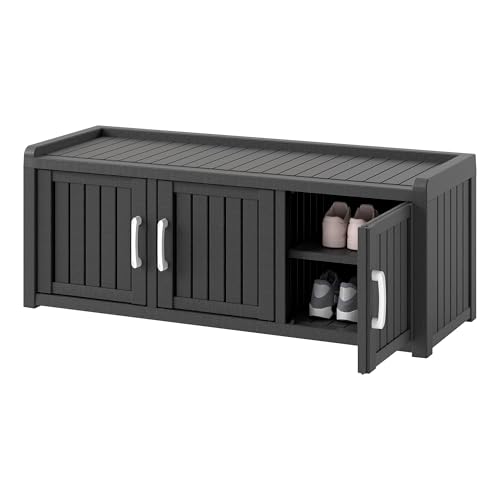
🏠Weatherproof Resin Material: Crafted from durable, high-quality resin, this outdoor shoe cabinet defends against rain, moisture, and daily wear, keeping contents dry even in uncovered entryways. Built to last season after season.