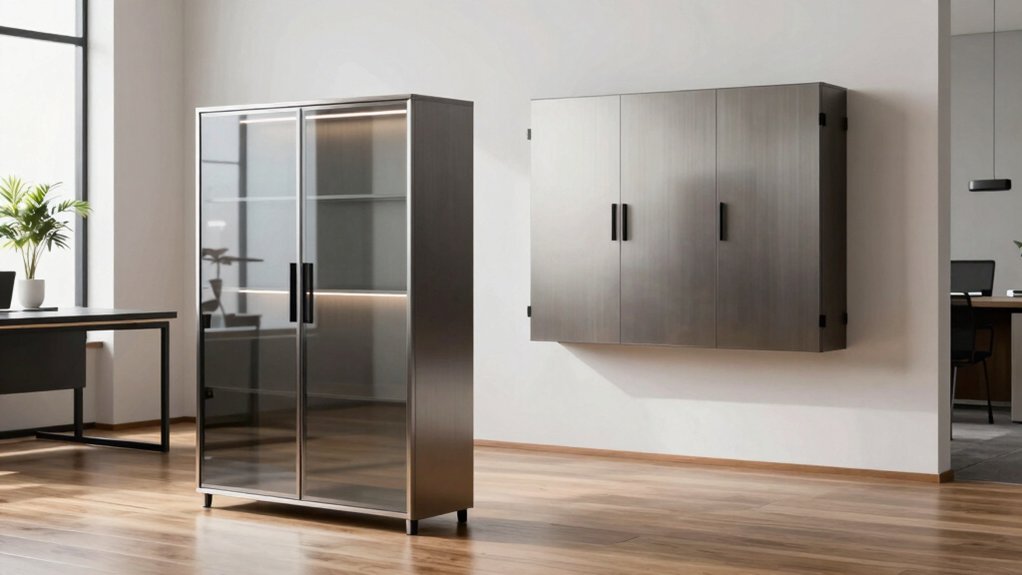
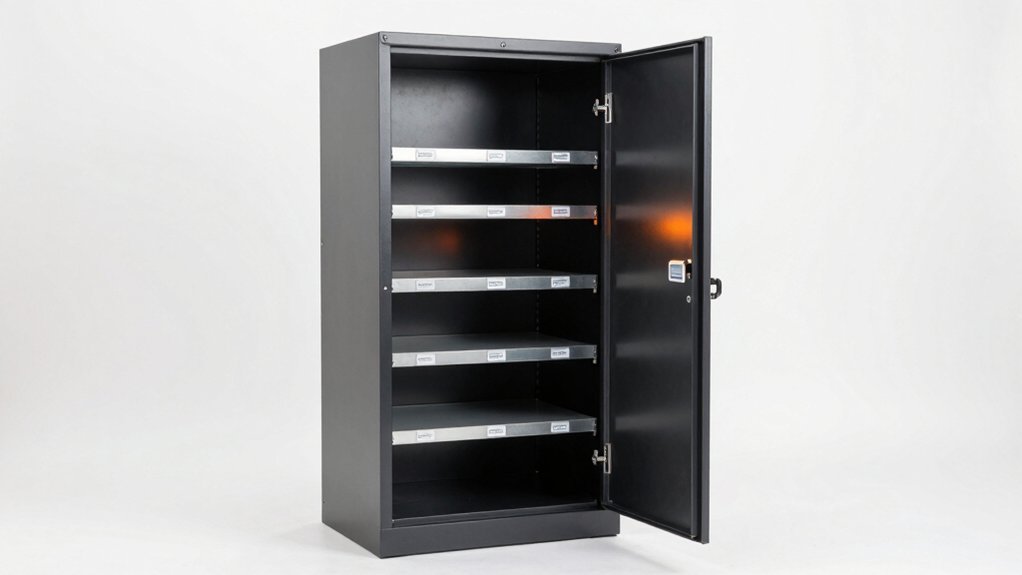
Conversion varnish is the most durable finish for storage cabinets. Its two‑part, chemically cured film creates a 40‑60 % solid layer that resists scratches, moisture, heat, and chemicals far better than lacquer, polyurethane, acrylic urethane, or oil‑based enamel. The high‑solid content and elasticity prevent cracking and peeling, while the rapid cure delivers a hard, long‑lasting surface. If you want to see how each finish stacks up on cost, maintenance, and specific use‑case strengths, keep going.
What Defines “Durable” for a Cabinet Finish?
When you evaluate a cabinet finish, durability means how well it resists the three primary threats that kitchens impose: physical wear, moisture‑related damage, and chemical staining. You should measure scratch resistance by counting visible marks after repeated opening, closing, and bumping; dents and chips count toward a 20 % impact weight. Moisture resistance involves blocking humidity, spills, and steam to keep wood from swelling or cracking, a factor weighted at 25 % in durability scores. Chemical resistance gauges how well the finish repels oils, grease, and cleaning agents without yellowing or degrading. Gloss retention indicates the finish’s ability to maintain a clean, reflective surface over years of use, directly affecting maintenance frequency. Together, these metrics define a truly durable cabinet finish. Material selection also plays a crucial role, as the underlying substrate influences how well a finish can protect against these common kitchen challenges.
Why Conversion Varnish Is the Strongest Cabinet Finish for Busy Kitchens
If you need a finish that can survive the constant opening, closing, spills, and cleaning of a busy kitchen, conversion varnish delivers the strongest protection. Its two‑part system creates a 40‑60 % solid, chemically cured film that bonds directly to the wood, yielding a hard, heat‑resistant surface. Baking the coat locks in hardness, achieving 85 % cure in two days and reducing the need for multiple layers. The finish resists moisture, humidity, scratches, and household chemicals, while its elasticity prevents cracking from wood movement. An ultra‑smooth, easy‑to‑clean coat maintains sheen after repeated wiping. Though the upfront cost is higher, the durable, eco‑friendly shield extends cabinet life, cutting long‑term refinishing expenses. Proper adhesion is essential for lasting durability, so using a 2K primer before applying conversion varnish maximizes bond strength. Additionally, a chemical stripper can efficiently remove old finishes without damaging the wood grain. Selecting the right finish also depends on the cabinet’s exposure to high‑traffic use, which conversion varnish handles exceptionally well. Powder coating offers a high‑impact finish that can further enhance durability for cabinets in demanding environments.

Do not apply clear topcoats over bright white paint, as yellowing may occur due to a reaction to the substrate. Light color paints may also experience yellowing due to topcoat application, but it will less noticeable.
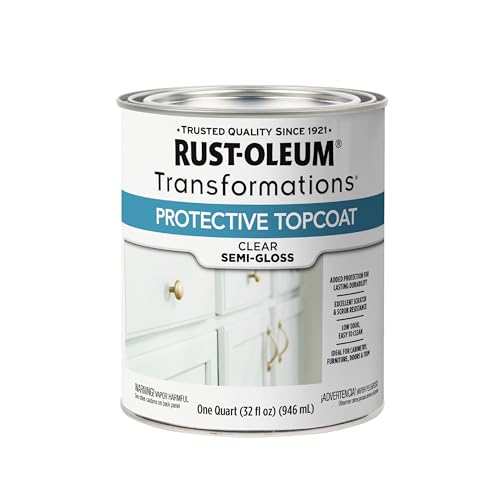
SCRATCH & STAIN RESISTANT PROTECTION: Resistance to everyday scratches and stains, providing a durable protective layer for interior painted, stained, or bare wood surfaces
Why Catalyzed Lacquer Is the Best Cabinet Finish for Moisture‑Heavy Bathrooms
Conversion varnish proves its worth in kitchens, but bathrooms demand a finish that can outlast relentless humidity. Catalyzed lacquer delivers superior moisture resistance because its chemical curing creates a cross‑linked polymer network that water‑repels far better than nitrocellulose. The pre‑catalyzed formula adds the catalyst at the factory, eliminating on‑site mixing errors and ensuring a consistent cure. When applied to MR‑MDF or plywood, the hard, dense film resists abrasion and yellowing, while high‑solids primers seal edges against infiltration. Build thickness of 0.7–1.3 dry mils maximizes durability without crazing. Although shelf life is limited, proper inventory management preserves the catalytic activity, making catalyzed lacquer the most reliable finish for moisture‑heavy bathrooms. Selecting the proper drawer slide type ensures smooth operation and supports the durability of the cabinet finish. Proper ventilation during application helps the cure process and reduces the risk of bubbles. Surface preparation is essential to achieve a flawless, long‑lasting seal.
When Polyurethane (Oil‑Based vs. Water‑Based) Beats Other Cabinet Finishes
Although oil‑based polyurethane still boasts the toughest film against heat, moisture, and wear, modern water‑based formulas now match—or even exceed—that durability while drying in a fraction of the time and emitting far fewer VOCs. You’ll find water‑based polyurethane offers comparable VOC resistance, a high‑gloss finish sheen, and a self‑crosslinking matrix that rivals oil‑based scuff and UV protection. It cures in 2‑4 hours, letting you apply multiple coats in a day, whereas oil‑based needs 8 hours per coat and can stretch to 24 hours in humid conditions. Both systems achieve decade‑long endurance, but water‑based’s lower emissions, faster cure, and easier cleanup make it the more efficient choice for residential cabinets. Water‑based finishes also exhibit minimal yellowing over time, preserving their clear appearance. Selecting a material with high fire resistance can further extend the cabinet’s lifespan in demanding environments. Plastic storage cabinets are also known for their lightweight durability, making them easy to move while still with up to heavy use.

Protects indoor wood surfaces such as furniture, windows, cabinets, trim and more

Protects indoor wood surfaces such as furniture, windows, cabinets, trim and more

Protects indoor wood surfaces such as furniture, windows, cabinets, trim and more
Why Acrylic Urethane Offers Flexibility and Crack Resistance in Cabinet Finishes
Because acrylic urethane blends the easy‑application nature of water‑based systems with the toughness of traditional polyurethane, it creates a flexible film that bends with temperature and humidity changes instead of cracking. You’ll notice that the urethane modification enhances film toughness, allowing the coating to absorb expansion and contraction without surface failure. This Flexibility resistance prevents warping, peeling, and cracking even in high‑traffic kitchens where heat, moisture, and grease are constant. The water‑based process simplifies application, while fast drying and 30‑45‑minute recoat windows keep projects on schedule. Low VOCs, UV protection, and chemical resistance further protect the finish, delivering a durable, non‑yellowing surface that retains its appearance for years. The Gallery Series’ rapid cure time of 30–45 minutes also speeds up project timelines. Implementing a clear labeling system within cabinets helps maintain organization and reduces the time spent searching for items.

✅ One pre-filled precision applicator is included for small repairs, touch-ups, and detail sealing where control and accuracy matter.

✅ One pre-filled precision applicator is included for a single touch-up, repair, or small sealing job without reloading or cleanup.

✅ One pre-filled precision applicators are included for completing multiple touch-ups, small repairs, or ongoing projects without reloading or cleanup.
Can Lacquer Give You Beauty Without Sacrificing Durability in Cabinet Finishes?
Can lacquer truly combine beauty with durability in cabinet finishes? You’ll find that acrylic lacquer delivers an eco‑friendly sheen while preserving grain‑enhancing clarity. Its chemically hardened layer resists scratches, moisture, and daily wear, matching conversion varnish longevity without yellowing wood. The finish dries quickly, allowing professional application and easy cleaning with mild products, which extends lifespan. Compared with laminate or painted surfaces, lacquer offers a luxurious, factory‑like look and superior protection, rivaling polyurethane in scratch and moisture resistance. UV inhibitors guard against sunlight damage, and the hard surface tolerates heat and oil exposure. For high‑traffic kitchens, lacquer maintains appearance for decades, providing both aesthetic appeal and robust durability. Selecting the right finish also depends on the wood species, as hardwoods like oak benefit from enhanced grain protection that highlights natural patterns while shielding against wear. Properly preparing the surface ensures optimal adhesion and a smooth, lasting coat.
Why Oil‑Based Enamel Remains a Traditional Cabinet Finish for Classic Kitchens
When you choose oil‑based enamel for a classic kitchen, you’re tapping into a finish that has proven its durability over decades. Its progressive hardening creates a furniture‑like shell that resists dents, dings, and scratches, delivering a glassy, high‑sheen surface that maintains a sleek, factory‑like look. The finish’s thick film offers superior grease, moisture, and heat resistance, which is why high‑wear areas still favor it despite newer alternatives. You’ll notice the classic appeal and nostalgic value in the smooth, rich tone that ages gracefully, while the long cure time and VOC emissions demand careful prep and ventilation. Properly applied, oil‑based enamel endures ten to twelve years in busy kitchens, outlasting latex and matching urethane hardness. Different latch latch cabinet door latch types can further enhance the longevity of the finish by reducing hardware‑induced wear. Evaluating the cost‑benefit of storage cabinets helps ensure the investment aligns with both durability needs and budget constraints. For best results, follow the recommended surface preparation steps before painting.

NSF CERTIFIED FOOD GRADE - This premium mineral oil is NSF certified and lab-tested to meet the strictest food safety standards. Colorless, odorless, tasteless, and gluten-free — perfect for cutting boards, butcher blocks, and all food-contact surfaces.

Provides richer, more natural color to interior wood furniture, cabinets, doors, trim, floors and paneling

Provides richer, more natural color to interior wood furniture, cabinets, doors, trim, floors and paneling
Final Ranking: Longevity, Maintenance & Cost of Each Cabinet Finish
If you weigh longevity, upkeep, and price, conversion varnish tops the list, followed by polyurethane, catalyzed lacquer, and acrylic urethane. Conversion varnish delivers the highest durability, minimal cleaning, and a long service life, justifying its premium cost in a Cost‑benefit analysis. Polyurethane offers strong scratch and moisture resistance with lower material expense, making it a balanced choice for most kitchens. Catalyzed lacquer provides excellent chemical resistance and a classic sheen, but its professional‑only application raises overall cost. Acrylic urethane yields a smooth, flexible finish that tolerates humidity swings; its moderate price and ease of DIY installation appeal to budget‑conscious remodelers. Eco‑friendly options, such as low‑VOC water‑based polyurethane, improve sustainability without sacrificing performance. The adjustable shelving in many apothecary cabinets can complement these finishes by providing versatile storage for herbs and cosmetics. Selecting a coat with a high‑impact rating ensures the cabinet can withstand frequent handling in busy environments.