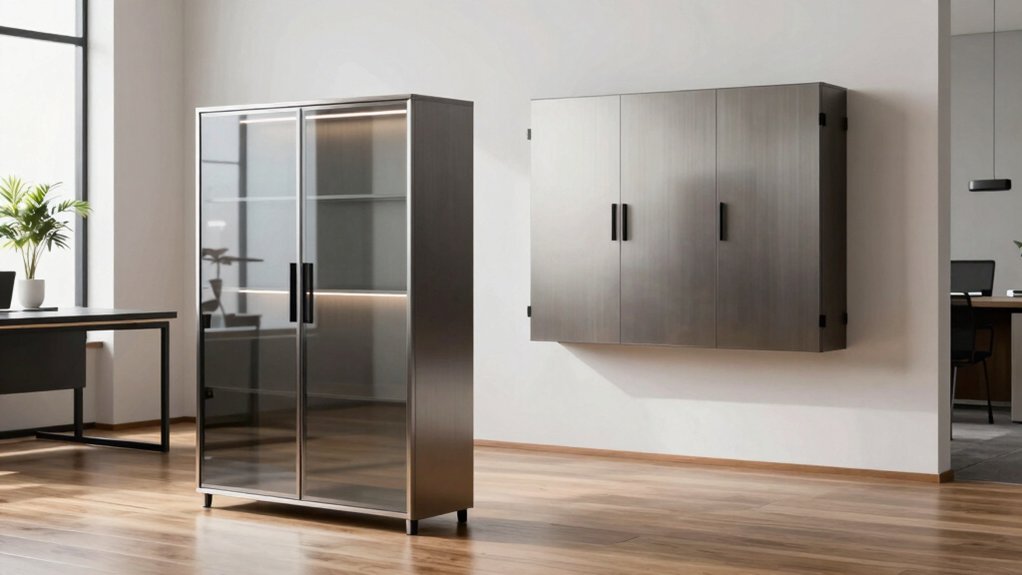
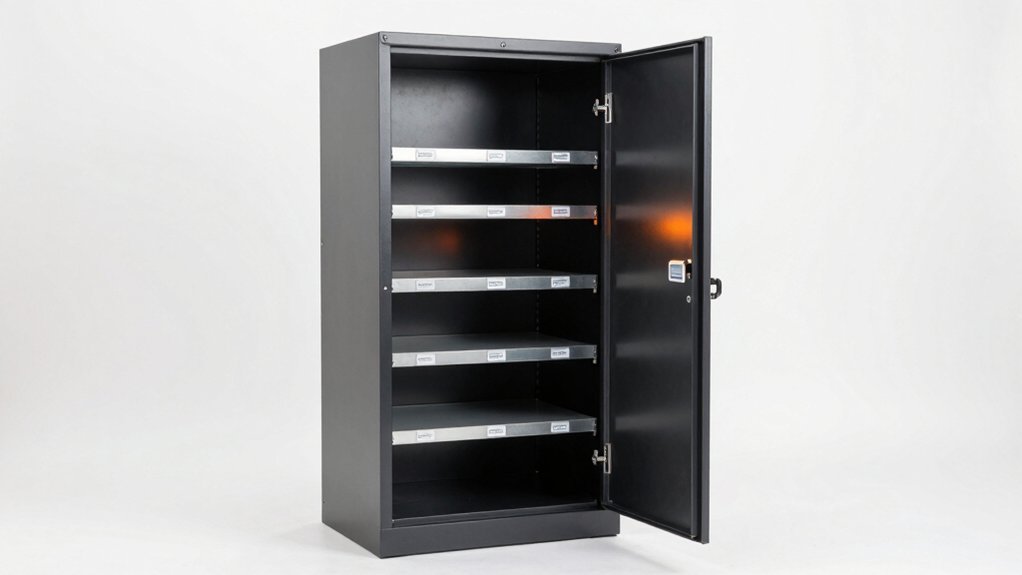
You see rust on your metal cabinets because moisture, oxygen, and acidic or alkaline vapors form an electrolyte film on unprotected steel, prompting electrochemical oxidation that speeds up in humid, warm, or salty air. Plain carbon steel lacks a protective chromium oxide layer, so corrosion attacks directly. Water spills or condensation bridge cracks and joints, increasing conductivity. Proper sealing, a sacrificial zinc coating, or a durable epoxy/urethane finish blocks moisture ingress. Follow the tips below to control humidity, improve ventilation, and maintain protective coatings, and you’ll uncover more detailed prevention strategies.
Why Your Metal Cabinets Rust
When corrosive chemicals sit on bare metal shelves, their acidic or alkaline vapors react directly with the cabinet’s steel, initiating oxidation that quickly turns into rust. You’ll notice that carbon steel, the most common cabinet material, lacks a protective barrier, so any vapor‑phase acid (pH ≤ 2) or base (pH ≥ 12.5) attacks the metal surface. An elect bracket without an acid‑resistant coating offers no defense, allowing corrosion‑inhibiting additives in the chemical vapors to be neutralized by the metal itself. Poor ventilation concentrates these vapors, accelerating the electrochemical reaction. Even galvanized steel only delays rust, because zinc phosphate layers can chip, exposing the underlying steel. Consequently, the cabinet’s structural integrity deteriorates, and rust spreads from the shelf edges to the entire frame. Proper airflow also moisture buildup and reduces the risk of mold and corrosion. Applying a protective coating can create a barrier that blocks moisture and corrosive agents from reaching the metal. Selecting a cabinet with a thick gauge steel can further resist deformation and rust formation.
How Humidity & Temperature Trigger Cabinet Rust
If the storage area’s relative humidity climbs above 60 % and temperature rises, moisture and heat together accelerate the electrochemical reactions that produce rust on metal cabinets. You’ll notice that high cond humidity saturates the air, supplying water molecules that dissolve oxygen and form electrolytic films on steel surfaces. When temperature cycling induces humidity condensation, droplets settle on the metal, extending the time of wetness and driving oxidation. Thermal expansion caused by heat creates micro‑cracks, exposing fresh metal to the electrolyte layer. The combined effect of warm, humid air and repeated cooling‑heating cycles doubles the corrosion rate per the Arrhenius relationship. Managing both humidity and temperature is consequently essential to limit rust initiation and propagation. A high humidity environment above 60 % acts as a “sauna” for metal parts, dramatically increasing corrosion risk. Properly load distribution within the cabinet also helps prevent stress points that can exacerbate corrosion. Regularly inspecting for surface scratches can catch early damage before it accelerates rust formation. Using protective coating on the interior surfaces can further inhibit moisture penetration and slow down oxidation.
Why Plain Steel Fails Without Chromium or Zinc Coatings
Even though plain steel looks robust, it lacks the protective chemistry that prevents oxidation, so it rusts quickly. You’ll notice that iron molecules on the surface react with oxygen and moisture, forming iron oxides that erode structural integrity. Without a chromium alloy, the metal can’t develop the self‑healing chromium oxide layer that blocks oxygen ingress; plain carbon steel contains no chromium, so the surface stays fully exposed. Likewise, zinc galvanization supplies sacrificial protection: zinc corrodes preferentially, preserving the underlying steel through cathodic conservation. When the zinc coating is intact or even damaged, it continues to corrode, shielding the steel. In the absence of both mechanisms, moisture and contaminants penetrate unhindered, accelerating rust formation and eventual failure. Surface preparation is essential before any coating application to ensure adhesion and longevity. Selecting the right storage cabinet also involves evaluating load capacity to match your storage needs. Powder coating adds an extra barrier that resists UV degradation and moisture infiltration. Metal cabinets are especially advantageous in high‑traffic environments where durability and security are paramount.
Why Water Spills Speed Up Cabinet Rust
Plain steel already lacks the protective chromium and zinc layers, so any moisture that lands on a cabinet surface instantly becomes a catalyst for oxidation. When water spills, it creates a thin, continuous film that bridges microscopic cracks and joints, opening new corrosion pathways. The liquid dissolves surface oxides and salts, forming an electrolyte buildup that accelerates electron flow between iron and oxygen. Warm, humid conditions further increase ion mobility, shortening the electrochemical reaction cycle. Salt particles from ambient air dissolve in the standing water, boosting conductivity and expanding the electrolyte layer. As a result, rust forms faster, especially at base pans and seams where water pools, turning a simple spill into a rapid degradation trigger. Proper sealing of seams can prevent moisture infiltration and significantly extend cabinet lifespan. Applying a weather‑resistant sealant to all joints creates a barrier that blocks water from reaching the metal. Selecting a cabinet with a powder‑coat finish further reduces corrosion risk.
How Proper Sealing Stops Water‑Induced Rust
When you apply a proper sealant to a metal storage cabinet, you create an impermeable barrier that blocks water from reaching the steel surface and halting the electrochemical reactions that cause rust. First, you must remove rust flakes, degrease, and dry the substrate to guarantee seal integrity. Next, you apply thin, uniform coats of a moisture barrier such as polyurethane or epoxy, allowing 24 hours between layers for adhesive bonding and crack prevention. The sealant’s vapor control properties repel moisture vapor, while flexible caulk along edges provides structural sealing that accommodates thermal movement. By maintaining a continuous, crack‑free barrier, you stop water ingress, eliminate oxidation pathways, and preserve the cabinet’s corrosion resistance. Metal storage cabinets also benefit from their inherent durability and resistance to impact, which further extends their service life. A thorough surface cleaning with abrasive pad ensures optimal adhesion of the sealant. Properly locating studs or using wall anchors enhances mounting stability and prevents stress on the sealed surface.

Need a fix that holds fast and lasts? Our professional-grade epoxy sets in just 5 minutes and cures to a steel-like strength within 24 hours. It creates a permanent, waterproof bond that can be drilled, sanded, and painted, making repairs stronger than the original material.

【Powerful Waterproof & Leak-Proof Seal】- This clear waterproof sealant creates a dense, water-based membrane that effectively blocks air, water, and moisture. It delivers reliable leak prevention for any surface, ensuring your roofs, walls, and bathrooms stay dry and protected without altering their appearance. Perfect for both DIY enthusiasts and professionals seeking a trustworthy solution

Waterproof sealant: This clear caulk seals out air, water, and moisture with 100% silicone as cured
Common Production Flaws That Expose Metal
Why do production flaws matter? You’ll notice that bend‑line cracks appear when the radius is too tight, and brittle cracking can develop if you bend against the grain direction. Springback creates residual stress that later drives grain‑direction warping, especially on unsupported flanges. Cutting with dull tools leaves burrs and rough edges, which trap moisture and accelerate corrosion. Laser‑induced thermal stress warps panels, while inadequate lubrication scratches surfaces, exposing bare metal. Casting porosity—blowholes, pinholes, and gas pockets—forms pathways for water, and shrinkage defects create cavities that concentrate humidity. Surface indents, wavy patterns transverse to rolling, and streaks from contamination further compromise the protective coating. Ignoring these flaws leaves the cabinet vulnerable to rust. Proper anchoring and load capacity considerations can mitigate the risk of structural failure. Selecting the right material based on durability ensures long‑term performance. Understanding the materialmaterialweight of each option helps balance ease of handling with structural integrity.
✅ EFFORTLESS ACCESS TO CLUTTERED SPACES: 2-tier pull out sliding baskets transform your under kitchen sink or bathroom cabinet into organized storage – easily reach items at the back without digging or kneeling
Ample Capacity for All Earring Styles: This 5 tiered, 120 hole earring holder organizer and earring organizer holds up to 60 pairs of earrings, including studs, hoops, pearls, tassels and full earrings set. Extra empty holes reserve space for seasonal new purchases, preventing single-earring loss and keeping your collection organized.
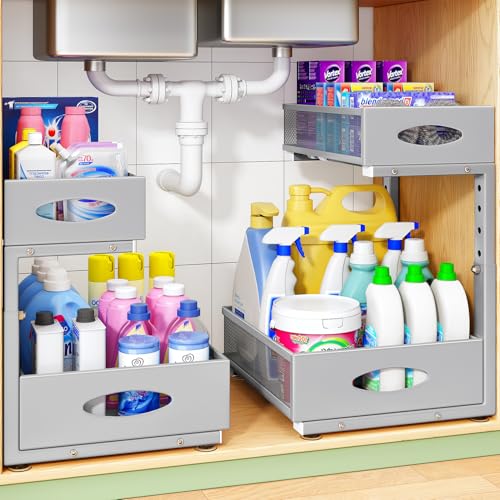
Larger Organizer for Maximum Efficiency: Assembled size: 11.8"W x 16"D x (11.7"–16.5")H. Top basket: 7.5"W x 15.35"D x 3"H, bottom basket: 11"W x 16"D x 3"H. Offers greater capacity for tall bottles, cleaning supplies, and everyday essentials. (Warm Tips: Please measure your cabinet before ordering.)
Best Coatings to Block Cabinet Rust
What coating will give your metal cabinet the toughest defense against rust? Epoxy coatings provide a seamless barrier, sealing moisture and oxygen while bonding tightly to steel. Their high adhesion and chemical resistance make them ideal for heavy‑wear environments. Polyurethane adds flexibility and UV resistance, preventing sun‑induced degradation and preserving a smooth finish. Zinc‑rich primers act sacrificially, offering cathodic protection that corrodes before the base metal, especially useful under marine‑grade paint systems. Powder coating delivers scratch‑resistant, moisture‑impermeable layers, extending visual appeal and lifespan. Oil‑based options such as boiled linseed or T9 Boeshield create thin, water‑displacing films that block corrosion without introducing moisture. During coating testing, prioritize formulations with rustproof pigments to guarantee consistent performance across varied climates. Proper surface preparation, such as thorough cleaning and abrasive blasting, is essential to ensure optimal adhesion and longevity. Selecting a coating with a high adhesion rating further enhances durability and resistance to chipping.

Versatile, easy-to-use, multi-metal dark grey epoxy adhesive that eliminates the need for welding or brazing

Product Description : Metal Repair Glue is a two-component, heavy- duty, high-temperature resistant, waterproof epoxy glue, it comes in 1.76oz container, including a set of pusher, scraper and mixed ratio 1:1 syringe. It is a non-irritating odor liquid metal cold welding adhesive, welding glue cures quickly, once cured, metal repair glue can form a strong and stable permanent bond.
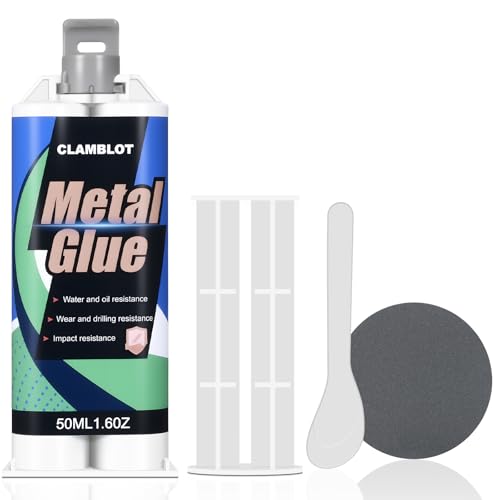
HEAVY-DUTY METAL GLUE & STEEL EPOXY- This 1.76oz waterproof liquid weld adhesive creates a powerful, permanent bond for metal to metal, metal to plastic, and steel repairs; Offering the strongest adhesive strength, it serves as a reliable pipe leak sealer and a versatile pegamento para metal
DIY Rust Cleaning & Restoration (Vinegar, Sandpaper, Epoxy)
Start by soaking the rusted cabinet components in a vinegar‑salt solution; the acetic acid and dissolved salt work together to dissolve iron oxide, while the prolonged immersion (typically 24‑72 hours) softens the corrosion enough for mechanical removal. After soaking, rinse and dry the parts, then inspect the surface. For stubborn spots, spread a vinegar paste—vinegar mixed with cornstarch—to adhere longer, let it set, and scrub with a nylon brush. Next, use coarse‑grit sandpaper to remove softened rust, progressing to finer grit for residual particles; a steel‑wool pad can finish tight crevices. Once the metal is clean and dry, apply a thin epoxy coating to seal the surface, preventing future oxidation and providing structural reinforcement. This sequence maximizes rust removal while preserving cabinet integrity. Rust formation accelerates when metal is exposed to moisture and oxygen, so proper drying after cleaning is essential.

COMPLETE 3-STEP SYSTEM — EVERYTHING INCLUDED: Kit contains a quart of KBS Klean heavy-duty degreaser, a quart of RustBlast rust remover & metal etch, 8 oz. of Gold Standard Tank Sealer, nitrile gloves, a stir stick, and step-by-step instructions — no extra purchases needed to get the job done right.

EFFECTIVE WATERPROOFING FOR SMALL REPAIRS - YKF transparent waterproof sealant 12 oz is a water-based clear coating that cures into a dense protective membrane to help block water, air and moisture. Ideal for small leak repair, surface sealing and waterproof protection around roofs, walls, bathrooms, kitchens, sheds and outdoor areas.
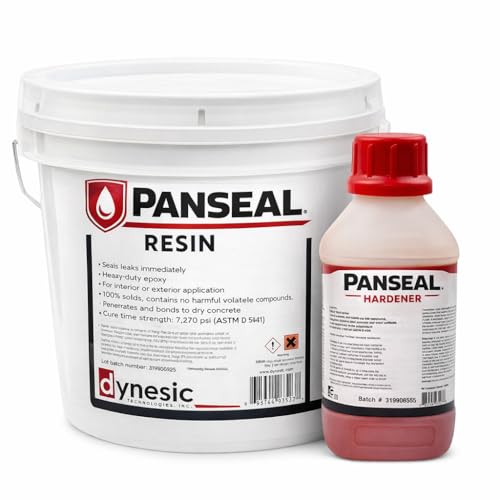
EXTREME ADHESION STRENGTH – Industrial pull-off adhesion up to 2,750 PSI creates a permanent waterproof bond. Ideal epoxy coating for concrete floors, metal surfaces, fiberglass, cracks, and drain pan repairs.
Moisture‑Control Strategies: Dehumidifiers, Silica Gel, Ventilation
If you keep the cabinet’s humidity below 50 % and guarantee steady airflow, you’ll prevent condensation and the rust it triggers. Deploy a portable dehumidifier near the cabinet’s base, ensuring humidhumidifier placement maximizes air exchange without obstructing doors. Set the unit to maintain 30‑60 % relative humidity; this range suppresses surface moisture during cooler months. Complement the dehumidifier with silica‑gel packets positioned on interior shelves, and conduct silica‑gel monitoring with a hygrometer to verify that humidity stays under the 50 % threshold. Install vent openings or a powered fan to flush warm, moist air and promote uniform circulation. Keep vents clear, seal door seams, and verify airflow regularly to sustain a dry, rust‑free environment.

【Advanced Humidity Control System】: Our 3D printer cabinet features an adjustable humidity range of 25% to 60%. The sealed environment, combined with efficient molecular sieve dehumidification, ensures your PLA, ABS, TPU, and Nylon filaments remain perfectly dry, preventing moisture-related printing issues and extending filament life.

【Portable and Durable Silica Gel Aluminum Desiccant Containers】: Silica gel aluminum can is designed with convenience and durability in mind. Each canister measures 4 x 2 x 0.5 inches, providing a compact size that is easy to carry and store. The high-quality aluminum construction ensures the canister remains firm and sturdy, protecting it from dents and damage. With their independent and portable design, these small silica gel tin canisters are a convenient solution for your storage needs.

【End Filament Moisture Problems – Silent, Self-Sustaining Dehumidification】Say goodbye to wet filament and failed prints. Our advanced molecular adsorption dehumidifier for 3D printer filament works continuously and silently (0dB) to maintain a low humidity environment below 30% RH. Unlike power-consuming heating methods, this filament drying box technology uses minimal electricity and no disposable desiccant, offering a maintenance-free and cost-effective solution for how to keep filament dry long-term. It's the ultimate silent dehumidifier cabinet for studios and bedrooms.
Ongoing Maintenance Practices to Keep Cabinets Rust‑Free
Maintaining a rust‑free cabinet requires a disciplined schedule of inspections, cleaning, and protective treatments; each task should be performed methodically to prevent corrosion from gaining a foothold. Follow an inspection schedule that targets hinges, locks, handles, seams, and joints every few months, tightening loose screws and replacing rusted hardware promptly. Pair this with a cleaning routine that uses a mild detergent, soft non‑abrasive cloths, and immediate drying to eliminate moisture and grime. Apply silicone spray to moving parts after each cleaning, and reapply rust‑proof wax or sealant quarterly. Address any rust spots detected during inspection with a soft brush and rust remover, then polish the surface. Consistent, precise execution of these steps keeps the cabinet’s metal integrity intact.