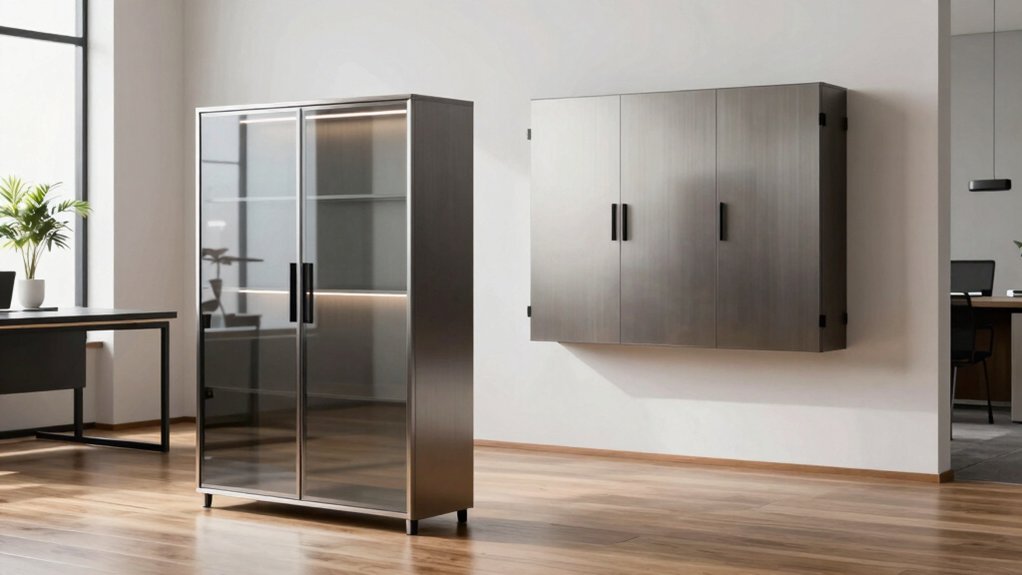
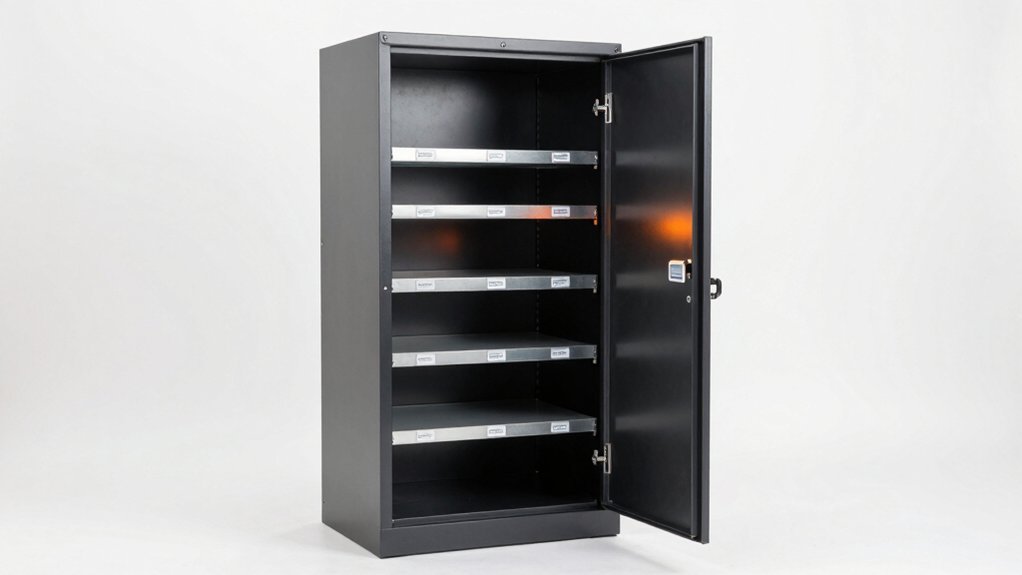
You’ll find that a 24‑inch exterior depth is the standard for base cabinets, giving you roughly 23 in of interior space after the back panel. Wall cabinets typically stay at 12 in deep, while taller pantry units range from a shallow 12 in to a deep 24 in, with a compromise 18 in option common. Custom islands or tight zones may use 27‑30 in or 12‑18 in depths respectively. Staying within these dimensions guarantees proper clearances, load capacity, and alignment with appliances, and the next sections will show how to fine‑tune these choices.
Choosing the Right Base Cabinet Depth
When planning a kitchen, you’ll first assess the available floor space and the intended workflow, then match those constraints to the industry‑standard 24‑inch base‑cabinet depth. You measure the exterior box depth at 24 in, subtract the 3‑in toe‑kick recess, and note the 4.5‑in toe‑kick height to confirm ergonomic reach. A budget cabinet at this depth maximizes storage while keeping costs low, because standard dimensions align with appliance clearances and reduce lead‑time expenses. Aesthetic proportion follows the 24‑in rule, ensuring the countertop overhang (25‑25.5 in) stays visually balanced with wall cabinets. By preserving workflow efficiency, you keep the work triangle intact and avoid cramped access, delivering a functional, cost‑effective layout. Consider the load capacity of the cabinet to ensure it can support typical kitchen items without sagging. Understanding typical depth ranges helps you compare base cabinets with wall and tall cabinets for a cohesive design. Properly assessing material strength ensures the cabinet can handle the intended load without deformation.

Quality Wood: The ready to assemble cabinet features 24 W x 24 D x 34.5 H (inch) cabinet size and 44 lbs load capacity. The main structure is crafted from high-quality particle board, while the drawer is made of MDF, ensuring long-lasting durability. All exposed panels are protected by corner protectors and carefully packaged to protect the surface from scratches

Sturdy and Long-lasting: The shaker kitchen cabinet's main structure is made of high-quality particle board, and the drawers are made of MDF. Designed for heavy load-bearing, it delivers strong support with all edges sealed for extended service life

CLASSIC SHAKER STYLE WITH PREMIUM FINISH: Enhance your kitchen remodel with our timeless white shaker base cabinet. The cabinet door is expertly crafted from High-Density Fiberboard (HDF) and features a flawless, multi-layered solid color painted finish. This engineered HDF surface guarantees a smooth, crack-resistant appearance that perfectly matches modern, minimalist, or farmhouse home decors.
How Deep Should Your Wall Cabinets Be?
After setting the base‑cabinet depth at the industry‑standard 24 in, turn attention to the wall cabinets, whose functional depth typically sits at 12 in. You’ll find that a 12‑inch depth aligns with cabinet ergonomics: it keeps headroom clear, allows eye‑level access, and accommodates plates up to 11 in in diameter without crowding the countertop. When appliances dictate deeper profiles—24 in over a refrigerator or 15‑18 in over a microwave—choose a matching wall cabinet depth to preserve visual continuity and guarantee material durability against load stress. Widths span 9‑48 in in 3‑inch increments, while heights range from 12‑42 in, preserving the 12‑inch depth across all. This schematic approach balances storage capacity, clearance, and structural integrity. Selecting the right finish can also enhance durability and aesthetic harmony, especially when matching hardware style throughout the kitchen. Consider the drawer cabinet material durability when selecting wall cabinets to ensure long‑term performance. Proper weight capacity assessment helps prevent sagging and extends the cabinet’s lifespan.
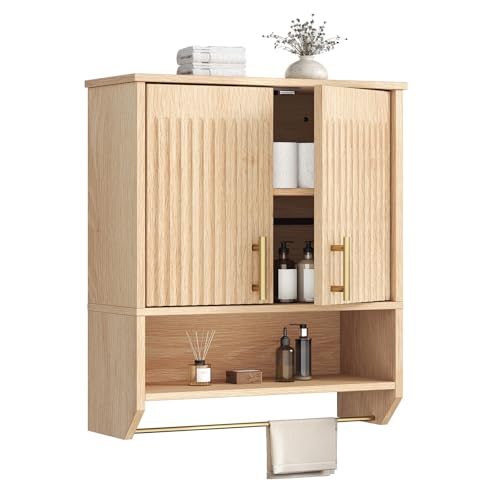
Perfect for Small Spaces: Struggling with limited bathroom space? This narrow wall cabinet is designed to maximize vertical storage without taking up floor space—perfect for small bathrooms, apartments, and tight wall areas

Design House offers furniture, lights, cabinetry, hardware, locks, rugs, mirrors and more for your home.

PREMIUM SHAKER DESIGN & FLAWLESS HDF FINISH: Elevate your kitchen's aesthetic with this classic white shaker cabinetry. Wall cabinets offer stylish flexibility to organize all your essentials with ease. The door is expertly crafted from High-Density Fiberboard (HDF) and features a multi-layered solid color painted finish. This engineered surface guarantees a exceptionally smooth, crack-resistant appearance that perfectly withstands daily kitchen humidity.
Choosing Shallow vs. Deep Tall Pantry Cabinet Depths
If you’re weighing a 12‑inch shallow pantry against a 24‑inch deep one, start by mapping the kitchen’s spatial constraints and intended storage volume. Measure aisle width, countertop overhang, and adjacent wall cabinets; a 12‑inch unit fits narrow walkways and aligns with 12‑inch wall cabinets, preserving uniform shallow ergonomics. For a 24‑inch deep pantry, confirm base‑cabinet depth and floor clearance, then calculate bulk storage needs—large appliances, 25‑lb bags, or brooms require deep capacity. Compare shelf depth (14‑16 inches) to item dimensions; shallow shelves offer quick reach, while deep shelves increase floor‑to‑ceiling volume. Choose the 18‑inch compromise only if the layout demands a middle ground. Prioritize reach versus volume, then lock in the height (84, 90, or 96 inches) that matches the rest of the tall pantry system. Consider the drawer mechanism to ensure smooth operation and durability. Modern coffee bar cabinets often feature adjustable shelving that can be reconfigured to accommodate different cup sizes and accessories. Selecting the right cabinet depth also impacts overall kitchen workflow, as deeper units can optimize storage efficiency by reducing the need for additional shelving.

SOLVE YOUR STORAGE NEEDS WITH STYLE – This double-door storage cabinet offers four adjustable shelves, providing customizable storage options for your home office, pantry, or craft room

Built to Last: The frame of this pantry cabinet is constructed from FSC-Certified wood. It includes wall-mounting for stability, ensuring it can handle daily use while keeping your kitchen tidy for years to come.

Fridge Space with Door Storage Shelves: Gagihoom food pantry cabinet with 6 storage shelves on each door like refrigerator space.The door storage is suitable for storing bottles, containers, and jars, make it easy to access.
Comparing Standard and Custom Cabinet Depths
Choosing between shallow and deep pantry cabinets already highlighted how depth drives ergonomics and storage volume; the next step is to weigh the trade‑offs of standard versus custom depths. Standard base cabinets sit at a 24‑inch depth, delivering a predictable 23‑inch interior after accounting for back‑panel thickness. This uniformity guarantees appliance compatibility, fast lead times, and cost‑effective customization because manufacturers mass‑produce the same material thickness. Custom depths, ranging from 27‑30 inches on islands to bespoke corner solutions, exploit every millimeter of space, boosting storage efficiency in irregular layouts. However, material thickness impact becomes critical: thicker panels increase structural rigidity but raise price, while thinner stock may compromise load capacity. Shallow options (12‑18 inches) suit tight zones, yet deeper custom builds justify higher expense when unique geometry demands it. Selecting a cabinet with a higher load capacity can prevent sagging and extend the unit’s lifespan. Because storage cabinets are movable and serve essential storage functions, they are also classified as furniture items. Adding a high‑quality lock can further protect contents, especially when the cabinet holds valuable or hazardous items, and many homeowners now consider security hardware as part of their overall design plan.

Ideal for Multiple Spaces: With its clean lines and stylish hardware, this freestanding bathroom vanity adds a touch of timeless modern elegance to any bathroom decor. Available in 24, 30, 36, 48, and 60 inches, this vanity fits perfectly in compact powder rooms and spacious master bathrooms alike, meeting all your storage needs

Bathroom Vanity Base Only: This freestanding bathroom vanity cabinet is designed as a base cabinet only. Sink top, faucet, drain and plumbing accessories are not included, giving you flexibility to pair it with a compatible vanity top.

Drawer Front Construction. Shaker drawer base kitchen cabinet drawer front is solid wood and MDF materials. Made from a 5-piece structure
Key Height, Width & Depth Clearance Rules
When you plan a kitchen layout, the clearance rules for cabinet height, width, and depth act as the backbone of a functional design. Base cabinets sit 34.5 in tall without a countertop and reach 36 in with a countertop, giving a 30‑in interior height and a 4‑in toe‑kick for material ergonomics. Depth stays at 24 in, extending to 25‑26 in with a counter, while shallow 12‑18 in options protect back‑reach comfort. Wall cabinets follow 30‑42‑in heights, mounted 18‑20 in above the countertop, and 12‑in depth for overhead storage, never exceeding base depth to preserve material durability. Width increments of 3 in from 9‑42 in (or 48 in) align with sink, pantry, and pull‑out requirements, ensuring consistent clearance across all cabinet types. Vertical storage can further maximize space efficiency in both kitchen and garage environments. Accurate measurement of interior dimensions should include clear interior volume to ensure all accessories fit properly. Selecting the right material can also impact the cabinet’s resistance to moisture and wear, making material durability a key consideration.
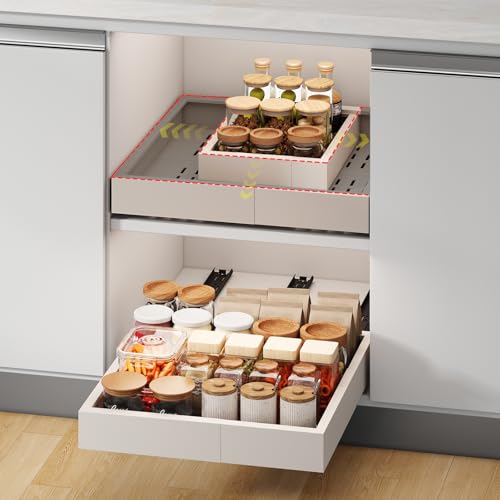
IMPORTANT NOTICE:Our cabinet pull out shelves are not suitable for cabinets with lips.Before ordering, please measure your cabinet dimensions correctly using the method shown in the picture.If your deep cabinet has a lip,please choose from our other drawers options designed for cabinets with a lip available in the store

Kitchen Wall Cabinet W2424: Measures 24-inches H by 24-inches W and features 2 doors, 1 adjustable shelf

IMPORTANT NOTICE: Our cabinet pull out shelves are not suitable for cabinets with lips.Before ordering, please measure your cabinet dimensions correctly using the method shown in the picture.If your deep cabinet has a lip, please choose from our other drawers options designed for cabinets with a lip available in the store
Avoiding Common Cabinet‑Depth Mistakes
Even a small miscalculation in depth can cascade into costly re‑orders, so you must verify every measurement against material thickness, filler gaps, and wall irregularities before finalizing the layout. Use laser distance meters and steel tapes as measurement tools, and record each wall length, floor slope, and wall bow before you start framing. Account for cabinet material thickness, knob protrusion, and required appliance clearance; a 0.25‑inch error can shift a drawer bank into a dishwasher door path. Plan traffic flow by reserving at least 36 inches of aisle width, expanding to 42–48 inches for larger kitchens. Align cabinet depth with refrigerator, oven, and dishwasher dimensions, and schedule installation timing to allow shims and on‑site adjustments for uneven walls or floors. This systematic approach eliminates cascading gaps and re‑orders. Organizing by size also helps keep similar containers together, reducing search time and preventing accidental spills. Proper shelf bracket spacing ensures each shelf can bear its intended load without sagging. Anchoring cabinets further enhances stability and complies with safety codes.