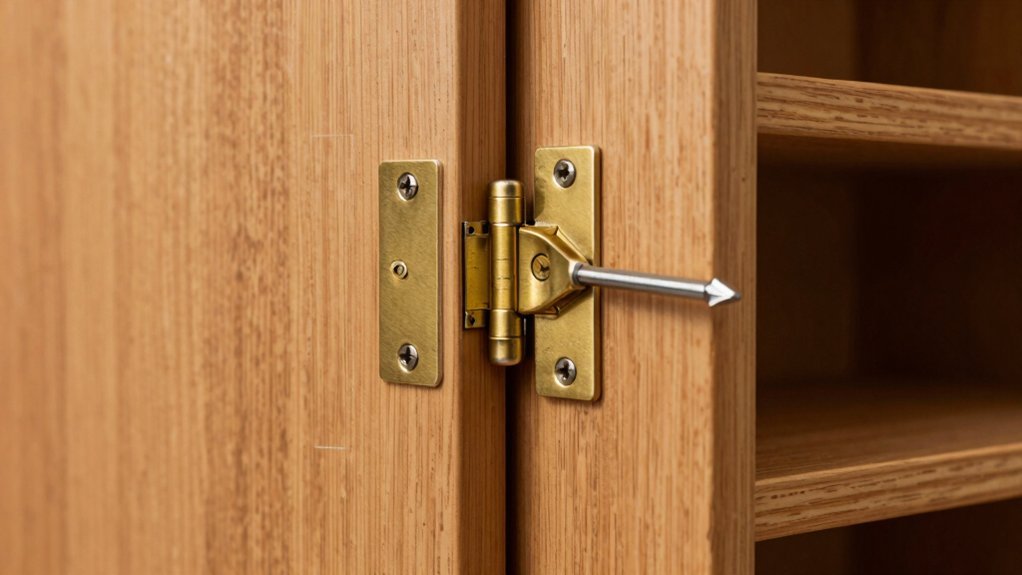
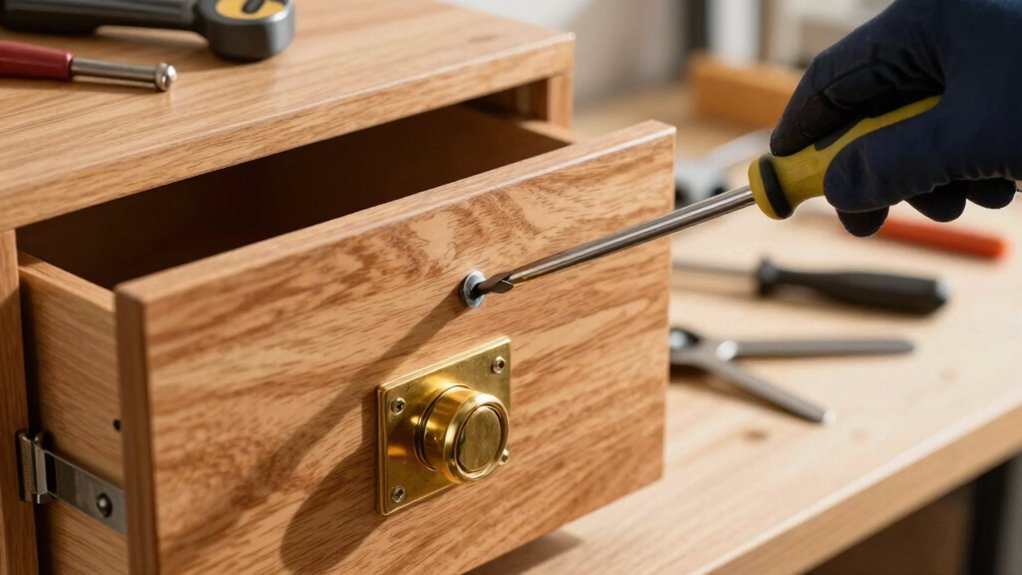
Pick SUS 304 stainless‑steel hinges for wet‑area cabinets; their corrosion‑resistant alloy and 520‑750 MPa tensile strength keep doors secure against moisture and acids. Choose brass hinges for a rust‑free, classic look with smooth ball‑bearing pivots. Opt for forged‑steel hinges when you need up to 200 lb load capacity, and use European‑style aluminum hinges for lightweight, anodized durability. Pair any of these with soft‑close, adjustable mechanisms to dampen impact and fine‑tune alignment, and you’ll uncover more on optimizing performance.
Why SUS 304 Stainless Steel Is Ideal for Wet‑Area Cabinets
Because wet‑area cabinets constantly face humidity, splashes, and occasional chlorides, you need a material that won’t corrode under those conditions. SUS 304 offers superior corrosion resistance thanks to its 18‑20 % chromium and 8‑10.5 % nickel alloy, which forms a passive oxide layer that shields against moisture, chlorides up to 200 mg/L, and dilute acids. Its tensile strength of 520‑750 MPa and yield strength ≥205 MPa give the hinge a robust load‑bearing capacity, while elongation ≥40 % guarantees ductility during installation. Weldability remains excellent because low carbon content limits carbide precipitation, preventing intergranular corrosion in the weld zone. The alloy’s density (7.93 g/cm³) and hardness (≤187 HB) support precision forming, making SUS 304 the optimal choice for durable, high‑performance wet‑area cabinet hinges. Material durability is a key factor when selecting storage cabinets for high‑moisture environments. Choosing a material with high impact resistance further ensures longevity under frequent handling.

【SUS304 Stainless Steel】The hasp lock constructed from h-q solid SUS304 Stainless Steel, Ensuring quality and longevity, Strong and durable, not easy to rust and oxidation.

Product name: 304 stainless steel flush hinge, folding butt hinge, can be more convenient to open and close a variety of items, making it safe and strong, and beautiful.

These 2.5-inch folding butt hinges are thicker and more durable compared to most cheap ones. Mounting screws are included here.
Choose Brass Hinges for Classic Look & Rust Resistance
When you need a hinge that combines timeless aesthetics with true rust resistance, brass is the go‑to alloy. Its copper‑zinc matrix eliminates iron, making the joint rust‑free even in humid or coastal settings. You’ll see a warm golden hue that delivers classic elegance, while lacquer or RSF finishes slow tarnish and protect the surface. Solid brass construction, often extruded to 1/8‑inch thickness, supplies the strength needed for frequent cabinet use; ball‑bearing pivots keep motion smooth and quiet. Choose polished, antique, or satin options to match Victorian or modern décor, and you’ll benefit from low‑maintenance cleaning and universal door‑size compatibility without sacrificing performance. Properly securing cabinet doors and hinges is essential to prevent forced entry and maintain long‑term durability. For larger or heavier doors, consider adding an extra hinge to ensure smooth operation. Cabinet lock systems can further enhance security by deterring unauthorized access.
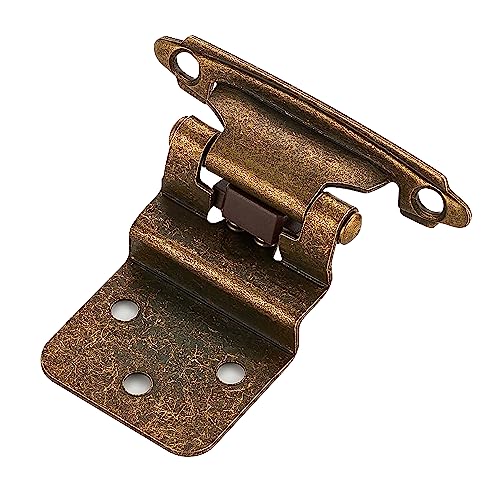
Dimension: Standard 3/8 inch overlay inset hinges designed for 3/8" inset cabinets, ideal replacements for original 3/8" doors Overall hinge wing length is 2-3/4" (70mm), with a hole center of 2-1/8" (54mm)

Package includes 100pcs of brass silver hinges, with matching screws for mounting holes, easy to install with a screw driver.

MATERIAL - These offset H Door Hinges are manufactured from high-quality solid brass material. Our exclusive RS finish makes them suitable for indoor and outdoor use, as they are tarnish-resistant.
Select Forged Steel Hinges for Up to 200 lb Loads
If you need a hinge that can reliably bear up to 200 lb on a storage cabinet door, forged steel is the prime choice. National Hardware’s N130‑799 strap hinge delivers a 200‑lb load capacity in zinc‑plated steel, using 3/8‑inch bolts for a flush‑frame fit. McMaster‑Carr offers comparable steel hinges starting at 250 lb, but the 200‑lb rating aligns perfectly with standard cabinet doors. Choose a 12‑inch strap hinge for doors up to 40 in; pair two hinges to distribute stress evenly. For cam‑lift mortised hinges, the 4.5 × 4.5‑in stainless steel model also reaches 200 lb when you install three hinges. Required installation tools include a drill, socket set, and torque wrench to achieve proper bolt tension and maintain the specified load capacity. The white‑coat galvanized coating on the reinforcement plate prevents rust even in humid environments. Proper alignment of the hinge’s adjustable mounting plate ensures smooth operation and maximizes load distribution. Invisible hardware also contributes to a clean aesthetic while maintaining structural integrity.
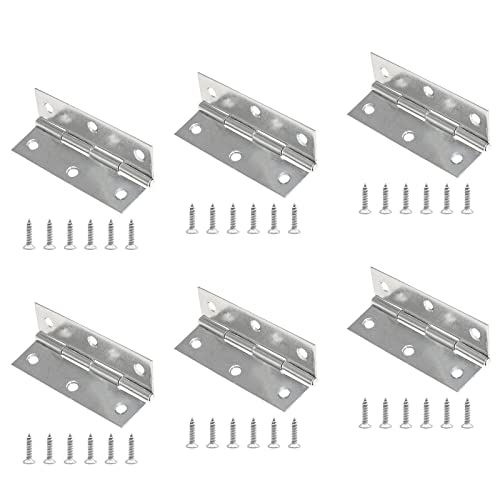
WHAT WILL YOU GET - You will get 6 pack butt hinge, mini hinges for crafts opening size is 55mm x 33.7mm/2.18inch x 1.33inch (length x width); Installation hole diameter is 4.3mm/0.17inch. Closed size is 55mm x 19mm/2.18inch x 0.75inch (length x width); Screw size is 15mm/0.60inch.

UPGRADE YOURS TODAY: The beautiful finish on our semi concealed brushed nickel cabinet door hinges matches your style of cabinet pulls or any nickel decorative hardware that will lift the appeal of your tired-looking cabinets.

EASY INSTALLATION: All hinges, screws and bumpers provided to start and finish the job fast.
Pick European‑Style Aluminum Hinges for Light‑Duty Doors
Forged‑steel hinges dominate heavy‑load scenarios, but for light‑duty doors you’ll get better performance and easier installation with European‑style aluminum hinges. Their aluminum weight cuts labor and material costs while delivering corrosion‑resistant, heat‑stable operation. The triple‑winged GN 2295 design aligns precisely, letting you mount flush or surface‑mount without mortising, preserving a concealed aesthetic that suits modern interiors. You’ll appreciate the low‑profile barrel that hides the pivot, maintaining a clean line even on oversized panels. One hinge per 30 inches supports doors up to 60 inches, distributing load evenly to prevent sagging. Anodized finishes add non‑toxic, non‑combustible durability, resisting rust and abrasion in harsh environments. Installation is streamlined: external leaf Type A snaps onto aluminum profiles, compatible with Grass, Salice, and Sugatsune systems, ensuring quick, repeatable setup for cabinets, wood boxes, and lightweight doors. For precise alignment, refer to the adjustment screws guide. Understanding the mounting method of concealed hinges helps achieve a seamless fit. Properly tightened pilot holes ensure the hinge plates stay securely in place.

Quantity & Accessories: Each hinge comes with four 15.5mm mounting screws. For easy installation, a installation instructions specifically designed for these cabinet door hinges is also included
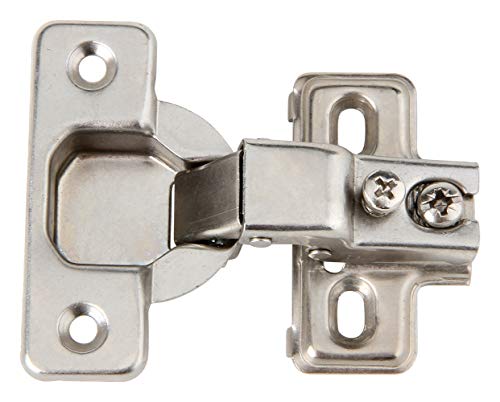
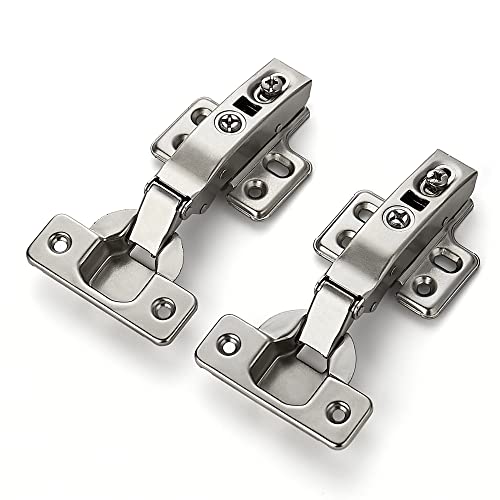
Full overlay type: The euro-style concealed kitchen cabinet hinge fit for full overlay doors on frameless cabinets. The cabinet door cover the cabinet almost completely with a 1/4inch of space between the doors or drawer It’s not fit for face frame cabinet
Assess Soft‑Close Hinge Systems for Quiet, Long‑Lasting Operation
Soft‑close hinges combine hydraulic dampers and acoustic liners to deliver a consistently quiet, controlled shut, even when you push the door hard. The damper engages during the last 10‑20° of travel, absorbing excess force and preventing slamming, while the acoustic‑quietness layer cushions impact and eliminates rattling. High‑quality units sustain 25,000‑50,000+ cycles without oil leakage, giving you quiet‑close durability that outlasts standard hinges by up to 50 %. Adjustable damping lets you fine‑tune speed, but the core hydraulic control reduces wear, extending cabinet lifespan up to 30 %. Routine cleaning and torque checks keep performance optimal, and occasional damper swaps are far cheaper than full hinge replacement. This engineered approach ensures silent operation, safety, and long‑term reliability. Selecting the appropriate hinge type—full overlay, partial overlay, or inset—ensures optimal alignment and load distribution for flush cabinet doors. Properly tightened screws prevent loose hinge issues that can cause misalignment. Regularly checking the screw tension helps maintain consistent door movement and prevents drift over time.

★⚠⚠⚠ Important Note: For FACE FRAME cabinet, the hinges will overlay 1/2" of the frame. For FRAMELESS cabinet, the hinges will overlay 1/2" of side panel. The video on the product page can help you check if the hinge you need is a 1/2". Size: 35mm Cup, 1/2" Overlay. Not sure about the size? Try our 2-pack first to check the fit before buying larger sets. If you're uncertain about the appropriate size before ordering or encounter problems during installation, please reach out to us. We're here to help!

Installation Specification: Cup diameter is 35mm; Cup depth is 11.5mm, Screw holes distance is 45mm; Opening angle is 105 degrees, suitable for most cabinet door styles. Each cabinet hinge comes with 2 easy-on dowels and 3 self-tapping wooden screws to ensure a perfect fit.
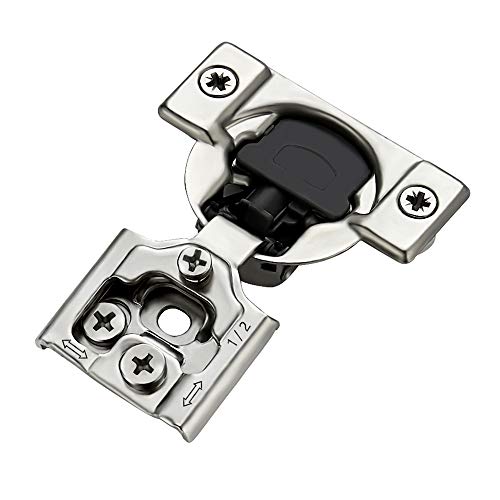
Installation specification: Cup diameter is 35mm; Cup depth is 11.6mm, Screw holes distance is 45mm; Opening angle is 105 degrees
Fine‑Tune Door Alignment With Adjustable Hinge Features
The quiet, controlled shut provided by soft‑close hinges sets the stage for precise door positioning, and the adjustable‑hinge system lets you fine‑tune that alignment with six‑way or three‑way adjustments. You’ll use the six‑way option to tweak height, side, and depth, each offering two opposing movements that compensate for frame irregularities and keep uniform gaps after installation. The three‑way variant fits 35 mm cups and 11 mm mortises, allowing up/down, left/right, and front/back shifts via a Phillips screw. This design supports precision calibration and torque optimization, ensuring the hinge bears load evenly and minimizes stress on heavy doors. Regular inspections and periodic screw tightening preserve alignment, while the forgiving adjustments slash labor time and enable future readjustments without removing the door. The nickel‑plated finish provides corrosion resistance, extending the hinge’s lifespan even in high‑humidity environments. Selecting the right hinge type is crucial for durability, as soft‑close hinges reduce wear by controlling door impact. Heavy‑duty cabinets also benefit from enhanced safety features that protect both equipment and personnel.
Premium vs. Budget Materials: Cost‑Benefit Overview
When you compare premium and budget hinge materials, the trade‑off centers on upfront cost versus long‑term performance. Premium steel and brass demand higher material cost, but their durability trade‑offs favor a longer lifespan versus price. Stainless steel resists rust and sustains heavy‑traffic doors, cutting replacement cycles and lowering total ownership cost. Brass adds aesthetic value while maintaining strength, making it ideal for indoor cabinets where wear is constant. Budget zinc alloy hinges reduce initial expense, yet they wear faster under load, increasing maintenance and replacement fees. For commercial or high‑use storage, investing in premium metals yields a net saving over time, whereas low‑use furniture can tolerate the shorter lifespan of cheaper options. The lightweight nature of plastic cabinets also reduces hinge stress and prolongs hinge lifespan. Selecting the right material depends on the load-bearing capacity required for the specific storage application. Properly tightening screws during installation can prevent premature wear and extend hinge life.