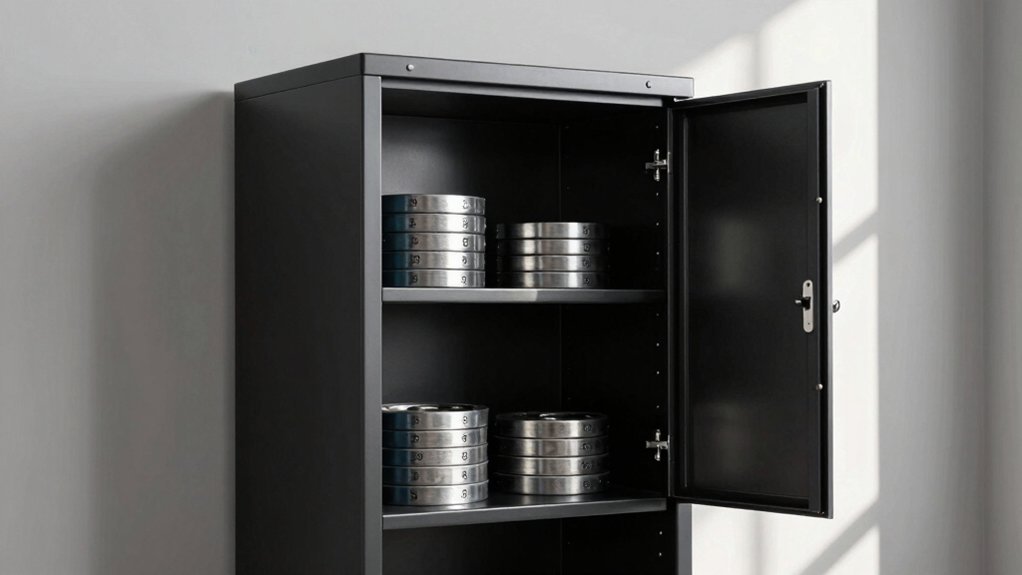
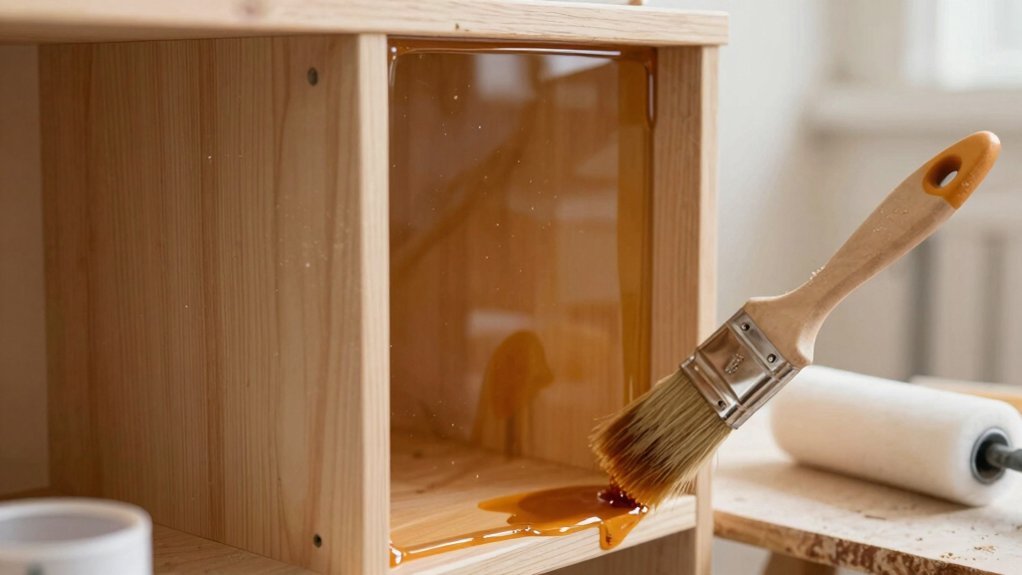
You see cracks because wood fibers absorb moisture, swell, and then shrink as humidity drops, pulling finishes away from joints and creating internal stress. Temperature swings cause similar expansion‑contraction cycles, especially where paint or veneer is rigid. Poor installation—oversized screws, mis‑aligned fasteners, or unsecured joints—amplifies movement, while water leaks and condensation add swelling and pressure. Inadequate surface preparation or rushed painting exposes these stresses. Keep reading to uncover how to stop them.
How Does Humidity Make Cabinets Crack?
When humidity rises, wood fibers absorb moisture and swell, especially across the grain, causing cabinet doors and panels to expand noticeably; this expansion pulls finishes away from joints and creates internal stresses that, once the humidity drops and the wood contracts, result in cracks and warped edges. You notice humidity absorption accelerates grain expansion, particularly in unfinished surfaces that take up moisture faster than painted or stained finishes. As relative humidity exceeds 80 %, panels bow and edges warp, while low humidity below 30 % forces the wood to contract, pulling the finish and joint seams apart. Repeated cycles misalign doors and frames, and particleboard or MDF fail to regain original shape, leaving permanent gaps and fissures. Maintaining indoor humidity between 30–50 % with dehumidifiers or ventilation mitigates these stresses. Proper ventilation helps balance moisture levels and reduces the risk of material degradation. Selecting cabinets with stable material can further reduce the likelihood of cracking. Implementing airflow control in storage areas also prevents moisture buildup and the associated damage.

Protects indoor wood surfaces such as furniture, windows, cabinets, trim and more

Package Includes: 12 Sets of M6 X 25mm Screws and M6 X 15mm Binding Nuts, plus a hex wrench

Protects indoor wood surfaces such as furniture, windows, cabinets, trim and more
Why Do Temperature Swings Cause Hairline Cracks?
If temperature swings push a cabinet’s wood beyond its natural expansion‑contraction limits, the material develops stress that manifests as hairline cracks. You’ll notice that thermal expansion in summer and contraction in winter create differential movement across stiles, rails, and panels. Seasonal stress concentrates at joints where one section expands faster than its neighbor, forcing the wood fibers to split at a microscopic level. Paint layers, being rigid, cannot accommodate this movement, so they crack alongside the wood. Rapid shifts—like moving a cabinet from a heated garage to a cool basement—exacerbate the effect, producing visible hairline fractures. Maintaining a stable ambient temperature within 68‑72 °F limits thermal expansion, reducing the likelihood of such cracks. Solid hardwoods such as oak and maple have high tensile strength and resistance to wear, which helps them better endure these thermal stresses. Proper vertical storage planning can also reduce stress on cabinet frames by distributing weight evenly. Selecting wood with natural moisture resistance further minimizes crack formation in fluctuating outdoor conditions.
Which Cabinet Material Reduces Cabinet Cracks?
Temperature‑induced stress shows that material choice matters most for crack resistance. When you prioritize material selection, engineered wood and high‑pressure laminate (HPL) outperform solid wood because their cross‑grain or layered resin structures absorb dimensional changes without warping. Plywood’s multiple thin layers glued together keep the surface stable, while melamine’s resin‑coated MDF resists moisture‑induced cracking at a lower cost. Stainless steel eliminates swelling entirely, offering the highest crack resistance, but its budget impact is significant. HPL laminate delivers comparable durability to steel at a modest price, making it a balanced choice for most kitchens. Avoid wood that lacks proper sealing, as water ingress will accelerate crack formation despite any budget advantage. Composite panels also provide a lightweight, fire‑resistant option that can reduce cracking in high‑temperature environments. Selecting the right material can also improve the cabinet’s resistance to thermal expansion. Adding a moisture‑resistant finish to wood cabinets further mitigates crack development caused by humidity fluctuations.
How Does Poor Installation Worsen Cabinet Cracks?
Improper installation quickly erodes a cabinet’s structural integrity, because unsecured joints and mis‑aligned fasteners let weight and movement stress the frame. When you fasten a cabinet to the wrong stud or skip pre‑drilling, the screw torque pulls the joint apart, causing joint loosening. Stud misalignment forces the frame to bear uneven loads, concentrating stress on weak points. Using wood screws in metal studs splits the material, while oversized deck screws without pilot holes crack the face frame. Cabinets that aren’t anchored to studs shift as the building settles, amplifying vibration‑induced movement. This instability accelerates crack propagation across panels and frames. Professional installers secure each joint, align studs precisely, and select appropriate fasteners to prevent long‑term weakening. Proper sanding ensures the glue penetrates fully, creating a stronger bond that resists future stress. Properly anchoring a cabinet with stud brackets distributes load evenly and reduces frame flex. Selecting a high‑quality lock further protects the cabinet from forced entry and helps maintain its structural stability. Using toggle bolts can safely support heavier cabinets on drywall when studs are not available.

【Applicable Scenario】10MM gas strut mounting bracket work for any gas spring with a connector bore diameter of 10mm. Euplokeer bracket compatible with most gas springs on the market.

Color: Silver;Hold size:8mm/0.31inch;Overall dimensions:61x25x38mm/2.4x0.98x1.5inch;Material: Steel,Zinc Coated
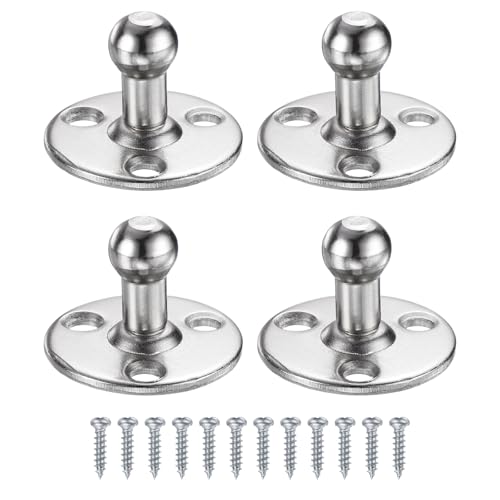
[Specification] Material: Carbon Steel; Color: Silver; Mount Hole Diameter: 4mm/0.16 inch; Ball Stud Diameter: 10mm/0.39 inch; Bracket Type: Round; Total Size: 28x20mm / 1.1x0.79 inch (DxH)
Why Does Water Damage Accelerate Cabinet Cracks?
When water seeps into a cabinet, the wood fibers absorb moisture, swell, and generate internal pressure that forces joints apart. This water ingress creates joint stress that exceeds the adhesive’s capacity, especially in plywood and particleboard, which swell irreversibly. Leaky pipes or faucet drips continuously feed moisture, widening micro‑cracks and softening the substrate. Condensation from poor ventilation raises humidity, softening finishes and allowing further penetration. As the wood expands, it warps, misaligning doors and stressing hinges, which accelerates crack propagation. Incomplete drying leaves residual tension; uneven shrinkage during evaporation introduces new fissures. The combination of swelling, softened material, and persistent joint stress rapidly escalates visible cracks throughout the cabinet. The wine cooler inside the cabinet can also leak, adding extra moisture that accelerates the damage. Proper ventilation reduces humidity buildup, preventing moisture‑induced swelling that fuels cracks. Using rust‑resistant coatings on metal hardware can further protect the cabinet from moisture‑related deterioration. Selecting cabinets with sealed gasket systems can significantly mitigate water intrusion.
How Do Painting Mistakes Expose Cabinet Cracks?
If you skip proper surface preparation, the paint will cling unevenly and any underlying wood movement becomes immediately visible as thin “witness lines” that trace the joints. Primer omission removes the bonding layer that masks joint flex, so even slight expansion creates dark lines. Grease or silicone residue repels paint, causing flaking that highlights cracks. Brush streaks from heavy‑nap rollers or careless brushing leave uneven thickness; the thicker spots crack first, exposing the wood beneath. Skipping TSP degreasing leaves oily film, preventing primer adhesion and accelerating peel‑off at joints. Unfilled gouges amplify line visibility, while rushed curing weakens the paint film, allowing movement to split the coating. Spot‑priming flaking areas can hide cracks, but only if the primer is applied correctly. Regularly inspect hinges to prevent loosening that can exacerbate surface stress. Proper sanding creates a uniform surface that helps the paint adhere evenly, reducing the risk of crack formation as the wood expands and contracts.
What Can You Do to Prevent Future Cabinet Cracks?
Maintaining stable humidity, ensuring proper installation, selecting resilient materials, and performing regular maintenance together form an all‑encompassing strategy to keep future cabinet cracks at bay. You should keep indoor humidity between 40–50 % with humidifiers in winter and dehumidifiers in summer, and integrate a seasonal sealing program that adjusts for climate swings. Upgrade kitchen ventilation to remove excess moisture during cooking and clear spills promptly. Hire professionals to use tapered drill bits, countersinks, and beeswax‑lubricated screws, allowing panels to expand without restraint. Choose HDF core cabinets from reputable manufacturers, and verify warranties cover wood‑crack failures. Conduct quarterly inspections, clean surfaces, and address pest activity immediately. This systematic approach minimizes expansion, contraction, and structural stress, preserving cabinet integrity. Use tapered drill bits and countersinks to prevent frame cracking. Consider the load capacity of the cabinet when arranging items to avoid excessive weight on shelves. UV exposure can also accelerate material degradation, so positioning cabinets away from direct sunlight helps maintain their structural health.