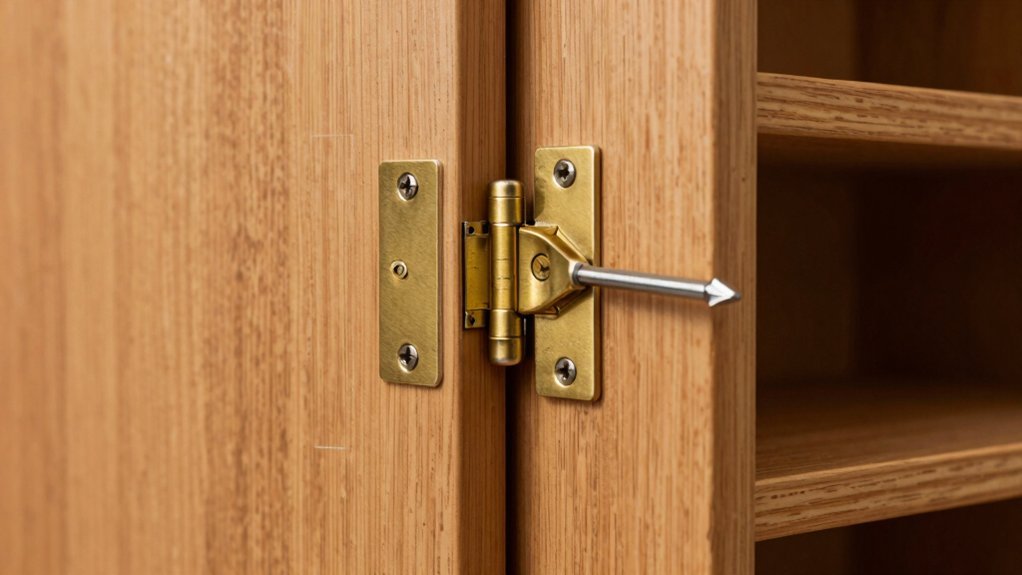
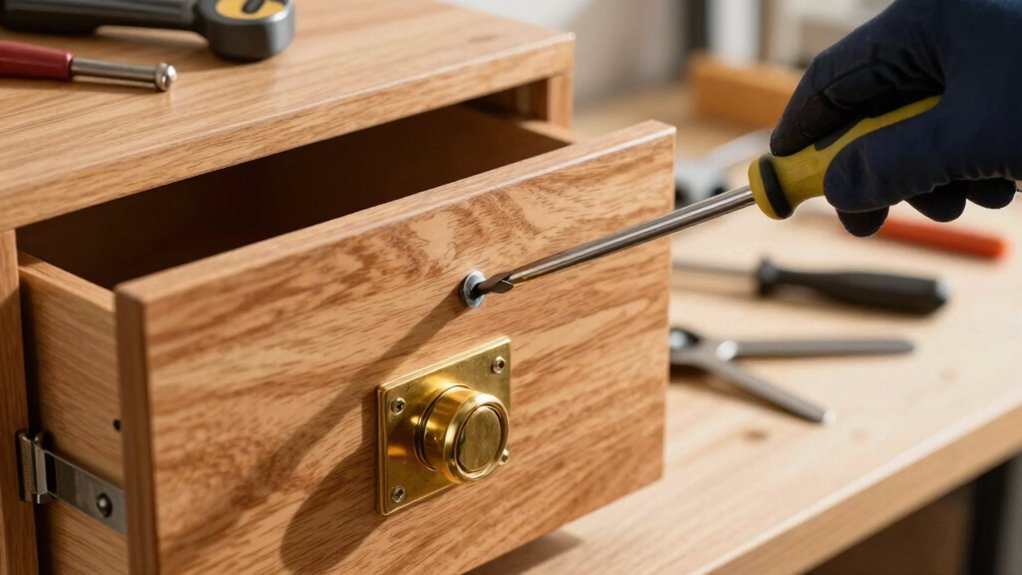
First, locate the two vertical‑adjustment screws on each hinge plate; loosen them enough to slide the door up or down, use a level, and tighten the bottom screw. Next, find the side‑to‑side screw on the horizontal arm, turn it counter‑clockwise to pull the door left or clockwise to push it right, adjusting top and bottom hinges as needed. Then, adjust the rear depth screw—counter‑clockwise widens the reveal, clockwise narrows it—checking the gap each quarter turn. Finally, fine‑tune tilt with the front screw and apply a thin layer of lubricant. Keep the torque consistent with a #2 Phillips driver, and you’ll get a perfectly aligned, smooth‑closing door. Continue for deeper insights.
3‑Way Cabinet Hinge Parts and What They Do
When you break down a cabinet hinge, you’ll see four core components—frame wing, door wing, knuckle, and pin—each serving a distinct function that keeps the door swinging smoothly. The frame wing attaches to the cabinet frame, either interior or exterior, and aligns with the door wing to support full‑overlay or partial designs. The door wing mounts on the door back or edge, pivots through the knuckle, and can accept a sloping edge in reverse‑bevel hinges. The knuckle joins the wings, forming the pivot point that allows rotation; it’s exposed in flush or inset hinges. The pin runs through the barrel or knuckle, securing the assembly and enabling smooth motion. Choose the right hingorn material and hinge finish to match durability and aesthetic goals. All three hinge types are soft‑close (sprung) hinges, and the soft‑close feature helps prevent slamming. European hinges are often preferred for their sleek, hidden appearance. Properly aligning the hinge can extend weight capacity and improve long‑term performance.
3‑Way Cabinet Hinge Adjustment: Raise the Door Vertically
You’ll need a Phillips‑head screwdriver, a level, and preferably an assistant to hold the door while you adjust it. Open the door fully, then locate the two vertical‑adjustment screws on the hinge plate—one at the top, one at the bottom. Loosen both just enough to let the hinge slide up or down, applying steady pressure to avoid stripping. With your assistant supporting the door, lift it at the hinge points until the vertical clearance meets the desired height. Use the level to verify even top‑to‑bottom alignment, then partially tighten the bottom screw to lock the position. Apply a thin film of hinge lubrication to the threads before fully tightening all screws. Double‑check the level, guarantee consistent height across all hinges, and tighten each screw firmly. The pre‑drilling of pilot holes ensures the new hinges sit flush without cracking the wood. Center screw loosening allows the door to slide horizontally for fine‑tuning of the seam. Consider the load capacity of the cabinet to ensure the hinges can support the door weight.
3‑Way Cabinet Hinge Adjustment: Shift the Door Horizontally
I’ll walk you through shifting a cabinet door horizontally by adjusting the lateral screws on each hinge. First, open the door and locate the side‑to‑side door screw on the hinge’s horizontal arm nearest the cabinet. Loosen the vertical screws just enough to let the hinge move. Turn the side‑to‑side screw counterclockwise to pull the door left, or clockwise to push it right; each quarter turn shifts about 1/8 inch. If the hinge includes a face cam, apply cam torque counterclockwise to move the door outward, clockwise to draw it inward. Adjust the top hinge for a right‑tilting edge and the bottom hinge for lower‑level correction. After each tweak, retighten the vertical screws, then repeat on the opposite hinge to keep gaps even across the face. Verify the door sits flush with the frame before final tightening. The back screw controls the door‑to‑cabinet gap, so ensure it’s properly set before making horizontal adjustments. A tight screw head can prevent the hinge from staying securely in place. For precise alignment, consult the adjustment guide that outlines the recommended torque settings. Using standard 24‑inch doors as a reference can help determine if two hinges are sufficient or if a third is needed for extra support.
3‑Way Cabinet Hinge Adjustment: Set Door Depth
If you need the cabinet door to sit flush with the frame, start by locating the depth‑adjustment screw on the back of the European‑style hinge. The depth screw sits on the rear side of the three‑screw hinge, separate from the horizontal and vertical controls. Turn it counter‑clockwise to widen the reveal gap; the door pulls away from the cabinet body. Rotate clockwise to narrow the gap, pushing the door closer for a flush edge. Make small, incremental turns—about a quarter turn at a time—checking the gap with a level after each adjustment. Keep the door stable; the depth screw works independently, so you won’t disturb horizontal or vertical alignment. Repeat until the reveal gap is uniform around the entire perimeter. A Philips screwdriver is required to turn the adjustment screws. Properly aligning the hinge prevents door sag and ensures smooth operation. Use a level to verify that the door is perfectly vertical and horizontal after each adjustment. When replacing a lock on a stack‑on gun cabinet, ensure the new lock’s tamper‑resistant design matches the cabinet’s security requirements.
3‑Way Cabinet Hinge Adjustment: Fine‑Tune Door Tilt
When the cabinet door tilts forward, backward, or sideways, fine‑tuning the hinge screws restores proper alignment without disassembly. First, support the door to keep it from dropping, then loosen the mounting‑plate screws on the top and bottom hinges just enough to let the leaf move. For vertical tilt, shift the door up or down by adjusting those screws equally, then retighten to the recommended screw torque. To correct forward‑backward lean, turn the rear depth screw clockwise to pull the door inward, counter‑clockwise to push it outward—use half‑turns and test closure each time. For sideways tilt, rotate the front screw clockwise or counter‑clockwise in quarter‑turn increments, matching top and bottom adjustments. Apply a thin film of hinge lubrication before tightening, then verify even gaps and re‑tighten all screws. Use a Phillips screwdriver to adjust the screws precisely. Regularly inspect the hinges for corrosion buildup to prevent future alignment issues. Consider using a wood filler to reinforce any stripped screw holes before re‑installing the hinge.
3‑Way Cabinet Hinge Adjustment Tips for Precise Results
Although the door may appear level at a glance, precise hinge adjustment relies on systematic inspection and controlled torque; start by measuring gap widths with a 0.5 mm feeler gauge, note any top‑to‑bottom variance, and verify screw tightness before you begin any movement. Use a #2 Phillips screwdriver with a 1.2 N·m clutch to loosen the top mounting screw, then shift the door vertically until the measured gaps match the ±1.5 mm tolerance. Tighten the screw, then repeat on the bottom hinge, using a smartphone level app to confirm cabinet alignment. For lateral tweaks, turn the smaller arm screws counter‑clockwise to move left, clockwise to move right, tightening to 0.8 N·m after each adjustment. Apply a thin film of hinge lubrication before final torque checks to guarantee smooth operation. European‑style hinges often require a Pozidriv driver for a tighter fit. Selecting the appropriate hinge type ensures optimal load capacity and durability for flush cabinet doors.
Typical 3‑Way Hinge Problems and How to Spot Them
Typical 3‑Way hinge problems show up as sagging, misalignment, sticking, rust, or loose installation, and you can spot each by inspecting the door’s movement and the condition of the screws and hinge surfaces. First, check for sagging: the door droops, screws feel loose, and the hinge plates wobble when you push the door. Next, look for misalignment: uneven gaps along the frame, inconsistent spacing between top and bottom hinges, and the door rubbing adjacent panels. Then, test for sticking: feel resistance, feel debris or worn pivots, and note any binding after humid cycles. Examine metal for rust or corrosion; reddish‑brown spots indicate poor rust prevention and demand hinge lubrication. Finally, verify that all screws are tight and not stripped, confirming a secure installation. Adjust the top‑left hinge to eliminate rubbing and achieve a consistent left‑hand gap. Selecting the right hinge also depends on its load capacity to support door weight without sagging. Properly measure door clearance before drilling pilot holes helps prevent future misalignment. Using a high‑quality lock on the cabinet further protects against unauthorized entry.
Fix a Dropped Door by Adjusting Top‑Bottom Screws
If the door has sagged, you’ll notice uneven gaps at the top and bottom, a rubbing bottom edge, and a higher‑looking top. Open the door fully, locate the vertical adjustment screws on the nearest arm of each hinge, and use a Phillips‑head screwdriver. Turn each mounting screw counter‑clockwise a quarter turn or less, then lift the door to the desired height. Check the level against the edge; the door material should sit vertically, and hinge wear will be evident if the screws strip. Tighten the screws clockwise, applying steady pressure to avoid thread damage. Close the door and verify even gaps; open and close several times to confirm smooth operation. If gaps persist, repeat the adjustment, ensuring both top and bottom hinges are evenly set. The door’s alignment can change with seasonal humidity fluctuations, so re‑check after a few weeks. For faster repairs, consider using a drawer slide kit that includes pre‑drilled holes and alignment guides.
Correct Door Lean With the Front Screw Technique
Ever notice a door leaning forward despite a tight frame? Start by closing the cabinet and inspecting each front hinge screw. If a screw feels loose, tighten it with a screwdriver while the door stays shut; this guarantees proper alignment and distributes screw torque evenly. Use flat‑head screws to avoid protrusion that could cause hinge wear. If the hole is stripped, replace the short screw with a two‑inch fastener that reaches the stud behind the frame. The longer screw pulls the misaligned frame back, eliminating forward lean. After tightening, re‑check all hinges for consistent torque and confirm that no additional hinge wear appears. This front‑screw method restores a square door without disassembling the entire hinge assembly. Middle hinge adjustment can further reduce any remaining gap at the bottom of the door. A well‑aligned hinge also prevents excessive wear that can lead to future damage. Understanding the cabinet’s weight capacity helps ensure that hinges are not overloaded during regular use. For a durable repair, consider filling stripped holes with wood filler before reinserting the screw.
Quick Troubleshooting Checklist for 3‑Way Hinge Issues
When a 3‑way hinge misbehaves, start by checking each of its three adjustment screws—back, vertical, and side—while the door is closed, because proper torque and positioning are the foundation for smooth operation. Verify the back screw’s depth; too shallow pulls the door out, too deep pushes it in and creates friction. Rotate the vertical screw to align the top edge; a mis‑aligned screw causes uneven gaps and impacts cabinet ergonomics. Adjust the side screw to fine‑tune the inter‑door clearance, preventing scraping. Next, conduct a hinge lifespan assessment: tighten any loose screws, replace stripped holes with wood filler, and inspect pins for rust or bend. Apply silicone spray, swing the door to distribute lubricant, and confirm no wobble remains. If issues persist, replace the hinge plate.