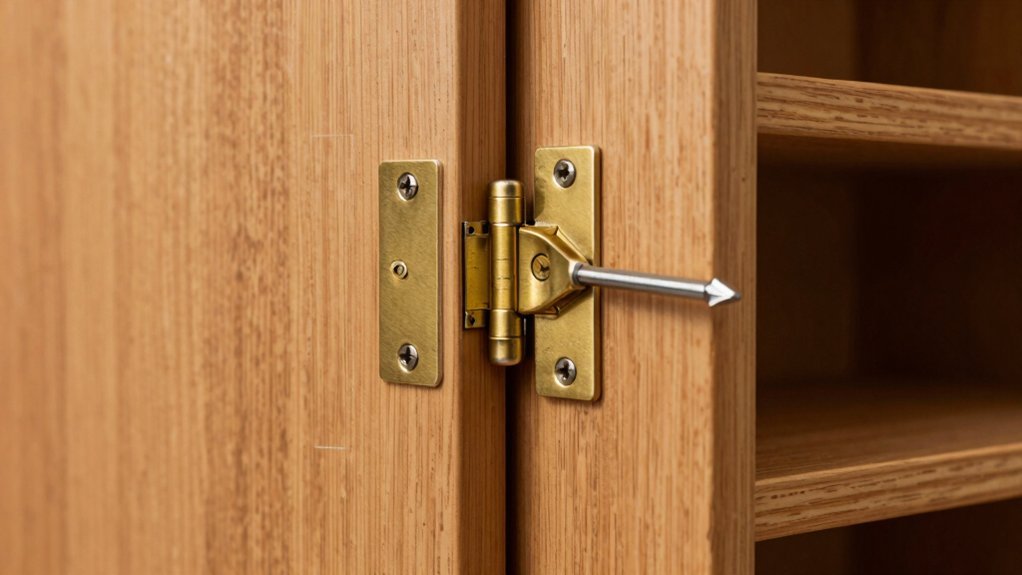
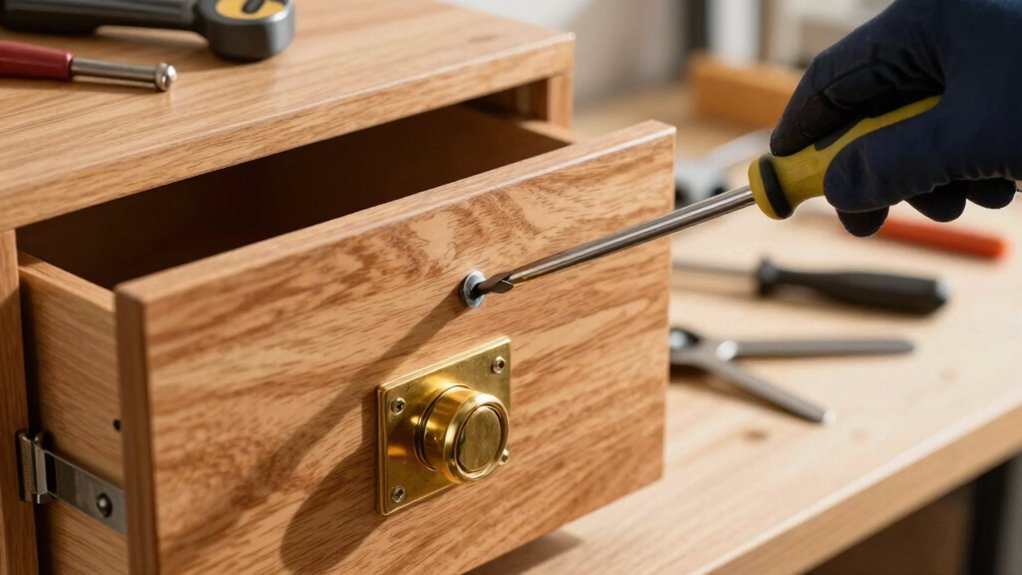
First, remove the door and clean the stripped hinge hole with a lint‑free cloth. Fill the hole using the method that matches the damage: dip several toothpicks in wood glue and pack them tightly for minor wear, apply wood filler or epoxy putty for larger gaps, or install a metal repair plate if the wood is too weak. Let the filler cure, sand it flush, then drill a pilot hole sized for the original screw. Re‑attach the hinge, tighten the screw to proper torque, and test the door’s swing. Continue for steps will show you how to finish and reinforce the repair.
Gather Tools & Prep the Door for Striped Hinge Hole Repair
First, gather the drill, a set of incrementally larger bits (starting at 1/8 in.), a screwdriver or hex‑key set, a wood saw, sandpaper, wood glue (e.g., Gorilla Glue), and a hammer. Organize your tools by function: drilling, fastening, cutting, and bonding, so you can switch quickly without searching. Remove the door, then clean the hinge area with a lint‑free cloth to eliminate dust and debris. Inspect the stripped hole, mark the center, and verify that the drill bit is slightly smaller than the intended insert (e.g., 7/32 in. for a 6‑32 insert). Lightly sand the surrounding wood to guarantee a smooth surface for glue adhesion. Keep a damp paper towel handy to wipe excess glue after insertion. This preparation guarantees accurate drilling, secure insert placement, and ideal surface cleaning before final assembly. The CA glue method proved to be the strongest, holding up to 30 lb. Properly aligning the hinge plate with the drilled hole is crucial for smooth door operation. Consider the load capacity of the hinge insert to ensure it can support the door’s weight over time. Secure the cabinet to the wall with anchor brackets to prevent tipping and enhance overall safety.
Identify a Strapped Hinge Hole and Assess the Damage
When you spot a stripped hinge hole, start by confirming it’s a strapped hinge: look for a mounting plate that clips onto or slides over the door edge. Verify hinge identification by measuring the cup diameter; kitchen straps use 35 mm, while 26 mm or 40 mm indicate other styles. Check the overlay on the hinge side—42 mm or 45 mm patterns reveal the exact model. Assess damage by grading the ripped base: minor pull‑away marks qualify as low‑grade, suitable for filler; extensive separation or cracked wood scores high‑grade, possibly needing replacement. Note any screw head fill in the socket to select the proper removal tool. Record the opening angle (95°‑110° typical) to guarantee the replacement matches the original function. This systematic inspection yields precise damage grading and confirms the correct strap hinge specifications. Overlay measurement helps ensure the new hinge will align properly with the cabinet opening. Additionally, using a wood filler can reinforce stripped holes before reinstalling the hinge. Understanding the soft‑close mechanism can prevent future stripping by distributing stress more evenly.
Choose the Best Repair Method (Toothpick Glue, Wood Filler, Epoxy, or Repair Plate)
If the hinge hole is only slightly enlarged, the toothpick‑and‑glue technique gives a fast, low‑cost fix; for moderate to large holes, a wood‑filler or commercial builder’s bog provides a stronger, sandable base, while epoxy putty is reserved for extensive damage where the wood has split, and a repair plate with a larger‑diameter screw is the go‑to solution when enough solid wood remains to grip a bigger fastener. Choose the appropriate selection based on hole size and load. For minor enlargement, dip four to five toothpicks in wood glue, insert, break flush, and reinstall the hinge for quick reinforcement. For moderate holes, clean, overfill with wood filler or builder’s bog, let cure, sand smooth, then screw. Use epoxy putty when wood is cracked or missing; shape, cure, sand, and drill pilot holes. If ample surrounding wood exists, replace the screw with a larger gauge and add a repair plate for maximum hinge reinforcement. Loose or sagging cabinet door hinges often cause misalignment, and tightening screws can restore proper alignment. Properly aligning the door vertically and horizontally may also require adjusting the hinge’s tension screws to eliminate gaps. A systematic cleaning of the cabinet interior can prevent dust buildup that interferes with hinge operation. Over‑loading the cabinet can accelerate hinge failure, so consider weight distribution when organizing items.
Execute the Selected Repair Technique
Having identified the most suitable method—whether toothpick‑and‑glue, wood filler, epoxy putty, or a repair plate—you now move to the hands‑on execution. First, remove the loose screw and clean debris from the stripped hole. For toothpick‑and‑glue, dip 4‑5 toothpicks in wood glue, insert them tightly, break off excess, then re‑drill the screw. For wood filler, apply a slightly overfilled bead, let it cure, sand flush, and drill a pilot hole sized for the screw. Epoxy putty requires mixing, packing the hole, holding the hinge while it sets (≈15 min), then sanding after full hardening. Repair plates need positioning, marking screw locations, drilling 2 mm shallow pilots, and fastening the hinge. Throughout, guarantee the selection strength meets load requirements and use color‑matching filler or paint for seamless appearance. Parallel drilling can speed up the process when multiple holes need to be prepared. The step‑by‑step approach ensures each stage is completed correctly before moving on. Adjusting the hinge’s screw tension can further fine‑tune door alignment after the repair.
Re‑install the Hinge, Test Alignment, and Finish the Door
After you’ve repaired the stripped screw holes, position the hinge over the filled area, align the screw holes precisely, and insert the original or replacement screws—starting with pilot holes if the wood is still soft—to avoid cracking. Tighten each screw incrementally, applying proper hinge torque to seat the leaf flush against the cabinet surface. Verify that all fasteners engage the filler material fully. Hang the door by attaching the opposite hinge side, then open and close it repeatedly, checking for smooth motion and even 1/16‑inch gaps along all edges. Adjust screws in small increments, tightening the opposite side to balance torque. Once alignment is square, sand the repaired area, wipe dust, and apply matching stain or paint to restore the surface finish. Cycle the door ten times to confirm stability. Use a drill to create pilot holes if the wood is still soft. Accurate measuring ensures the hinge sits correctly and prevents future misalignment. Installing a high‑quality lock on the cabinet door further protects against unauthorized entry.