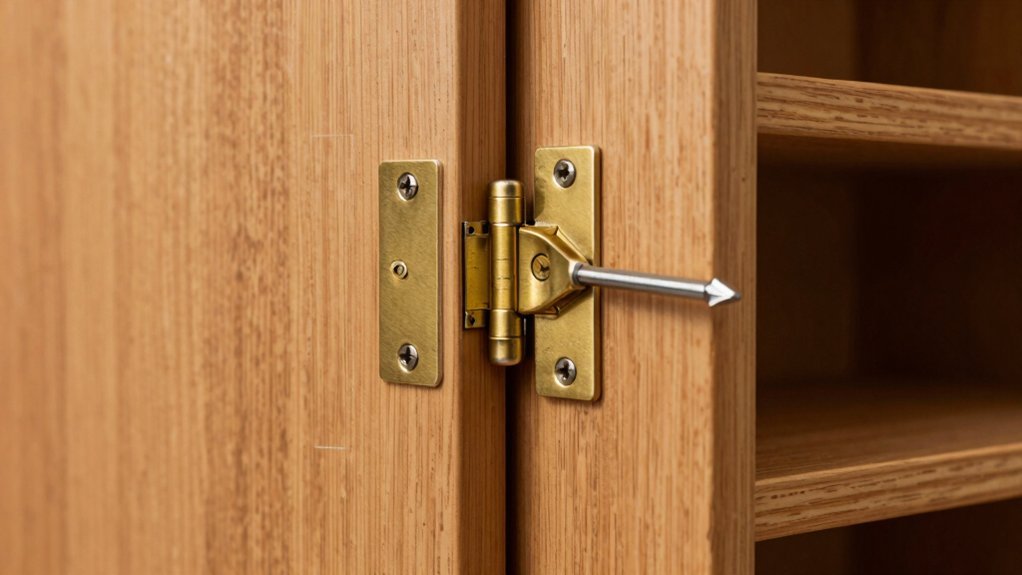
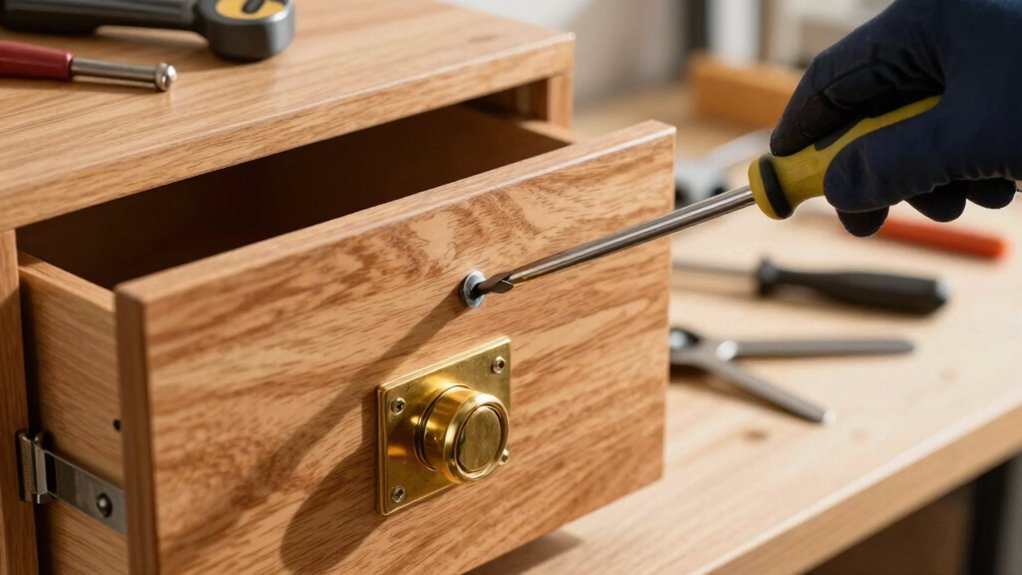
You turn the key or press the keypad, and the torque rotates a flat metal cam inside a cylinder about 90°. The cam’s tail slides into a frame slot, locking the drawer; releasing the cam lets it swing back and free the drawer. The cam’s angle and the cylinder’s orientation (bolt up) control how deep the lock engages, while the lock core houses the key or keypad. Proper mounting and material quality keep the mechanism smooth and durable, and the rest of the guide will show you how to install, troubleshoot, and choose the best lock for your cabinet.
Filing‑Cabinet Lock Mechanics Explained
When you turn the key in a filing‑cabinet cam lock, a flat metal cam inside the cylinder rotates and hooks behind the cabinet frame, stopping the drawer or door from moving. You then observe a cylindrical design that converts key torque into cam motion; the cam’s angle determines engagement depth, ensuring reliable restraint. This simple, cost‑effective mechanism dominates market share because it requires minimal material and tolerances, supporting lock sustainability through reduced waste and easy replacement. The cam’s low profile preserves security cabinet aesthetics, maintaining a clean, uniform exterior while delivering robust protection. By analyzing torque transfer, cam geometry, and frame interaction, you can assess performance, durability, and the balance between visual design and functional security. Insert the cylinder into the pre‑drilled hole with the bolt positioned upward proper orientation. Modern cabinets often benefit from enhanced durability features that extend the lifespan of the lock under frequent use. Properly aligning the lock’s cam latch during installation ensures smooth operation and prevents premature wear.
Key Components of a Filing‑Cabinet Lock
If you break down a filing‑cabinet lock, you’ll see four core components that work together to secure the drawer: the cam, the tail piece, the lock core, and the mounting hardware. The cam is a flat metal lever that slides into a slot on the cabinet frame; its rotation moves the tail piece about 90°, engaging or releasing the lock. The lock core houses the key or keypad mechanism and can be swapped by removing a rear screw, allowing upgrades from mechanical to electronic or combination systems. Mounting hardware—screws and brackets—anchors the assembly, ensuring proper alignment and material durability. Attention to lock aesthetics, such as finish and profile, complements the functional design while preserving the cabinet’s professional appearance. The tail piece can be mounted vertically or horizontally to suit left‑handed or right‑handed ergonomics, and orientation adjustment is achieved by loosening the rear screw, rotating the piece, and retightening. Selecting a lock with high material quality can significantly extend its lifespan in high‑traffic environments. Properly tightening the mounting screws prevents lock drift during frequent use. Choosing a lock with an appropriate security level ensures the cabinet meets the required protection standards for its intended use.
Deadbolt and Strike Plate Role in Filing‑Cabinet Locks
Even though the deadbolt is the primary barrier, its effectiveness hinges on the strike plate’s precise placement and robust construction. You’ll notice that the solid metal bolt slides fully into a reinforced strike plate, delivering resistance that spring‑loaded mechanisms lack. Align the bolt’s path with the plate’s hole during installation; any misalignment causes binding and weakens security. Use high‑grade strike plate materials—stainless steel or hardened alloy—to absorb pull force and prevent wear. Secure the plate with three‑inch, case‑hardened screws angled into the frame, avoiding thin edge screws that could strip. Test the lock repeatedly, confirming smooth extension and retraction. Proper boltbolt aesthetics, such as clean finishes, complement the functional design while maintaining the system’s integrity. Two 3‑inch screws are required for basic installation, but adding up to six screws can further enhance security. Ensure the drill bit size matches the bolt diameter to avoid loose fitting, and consider using a pilot hole for precise alignment. Selecting the appropriate lock type, such as a key lock or combination lock, can further tailor security to specific storage needs.
Pin‑Tumbler Unlocking Process of a Filing‑Cabinet Lock
The deadbolt’s strength depends on the strike plate’s placement, but the lock’s true security lies in the pin‑tumbler mechanism that governs whether the bolt can retract. When you insert the key, its bitting lifts each spring‑loaded pin to the exact height required to clear the shear line. All pins must align simultaneously; otherwise the plug stays blocked. Once the shear line is free, a slight turn of the key rotates the plug, pulling the bolt or plunger back and releasing the drawer. The cylinder’s keyway variations dictate which key profiles can engage, while master keying levels allow a single master key to lift a subset of pins across multiple locks. This precise alignment guarantees consistent unlocking and resists picking. Modern security standards often require a minimum of 12‑point lock engagement for commercial filing cabinets. Always wear protective gloves when handling the lock to prevent injury. Using a torque wrench can help ensure the strike plate is securely fastened without over‑tightening.
DIY Cabinet‑Lock Installation Guide
Looking to secure a drawer with a DIY cabinet lock? First, measure from the edge to the center point, mark level with a pencil, and tape the spot on finished wood. Verify clearance for the cylinder, cam, and bar, then empty and remove the top drawer. Choose the drill bit size recommended—usually 18‑22 mm—drill slowly from the outside face, keeping the bit straight and halfway from each side on thick material. Sand the exit lightly, then insert the cylinder from the front, aligning the keyhole and positioning the bolt upward. Mount the washer or plate, thread the nut, and tighten gently with a wrench. Attach the retaining clip, bend the linkage square end upward, and pivot the linkage into the sidewall hole. Finally, align the cam with the striker plate, test the key rotation, and confirm the lock color matches your aesthetic while the ergonomic handle feels comfortable. Ensure the height of drawer is greater than 3.94 in (100 mm) before installation. Cam lock security levels vary, so choose a lock that meets the protection needs of the items you store. Adding reinforced hinges further strengthens the cabinet against forced entry. Use a magnetic latch to provide an extra layer of security that can be easily disengaged when needed.
Typical Filing‑Cabinet Lock Issues & Simple Fixes
When a filing cabinet’s lock isn’t behaving, the cause is usually one of five common problems—an unlevel frame, a bottom that’s bent from moving, a broken key stuck in the lock, doors that won’t fully close, or a sticky mechanism. First, check leveling: a gap at the top but not the bottom signals an unlevel frame; adjust with glides or shims front‑to‑back and left‑to‑right. Second, inspect the bottom for bends after relocation; remove the drawer, straighten the frame, and verify alignment before addressing the lock. Third, if a key snaps, follow video guides or replace the lock—usually two screws or a clip away. Fourth, clear obstructions and confirm strike‑plate engagement when doors won’t close. Finally, lubricate a sticky mechanism with WD‑40, test the latch, and repeat if needed. Consistent lock maintenance reduces downtime and strengthens warranty claims. The original cabinet was found beside a road and taken home, showing how improvised relocation can affect its alignment. Lock‑picking basics can be useful for simple pin tumbler locks when other methods fail. Selecting a lock with a tamper‑resistant design further enhances security for high‑traffic office environments. Properly aligning the lock’s cylinder depth ensures smooth operation after installation.
Best Filing‑Cabinet Lock Type for Your Needs
Which lock type fits your filing‑cabinet needs depends on security level, usage frequency, and budget. If you prioritize affordability and simple installation, choose a cam lock; it offers a solid budget lock solution, a clean aesthetic finish, and works well for general office drawers. For higher protection, a cylinder lock with pin‑and‑tumbler or tubular design resists picking and demands a key, though professional alignment may be required. When you need key‑free convenience and audit trails, an electronic lock provides keypad or RFID access, eliminating key loss risk. Push‑button locks suit shared environments, delivering mechanical combination entry without keys. Magnetic locks excel in automated, high‑security setups but need constant power and are less common in standard cabinets. Stocking a complete lock kit can simplify repairs and reduce inventory complexity, making it a no‑brainer for suppliers. Adding a high‑security deadbolt further enhances resistance to forced entry and drilling. Consider the cabinet’s material durability to ensure the lock’s mounting hardware remains secure over time. A well‑designed lock can also improve the cabinet’s overall tamper resistance by integrating reinforced strike plates.