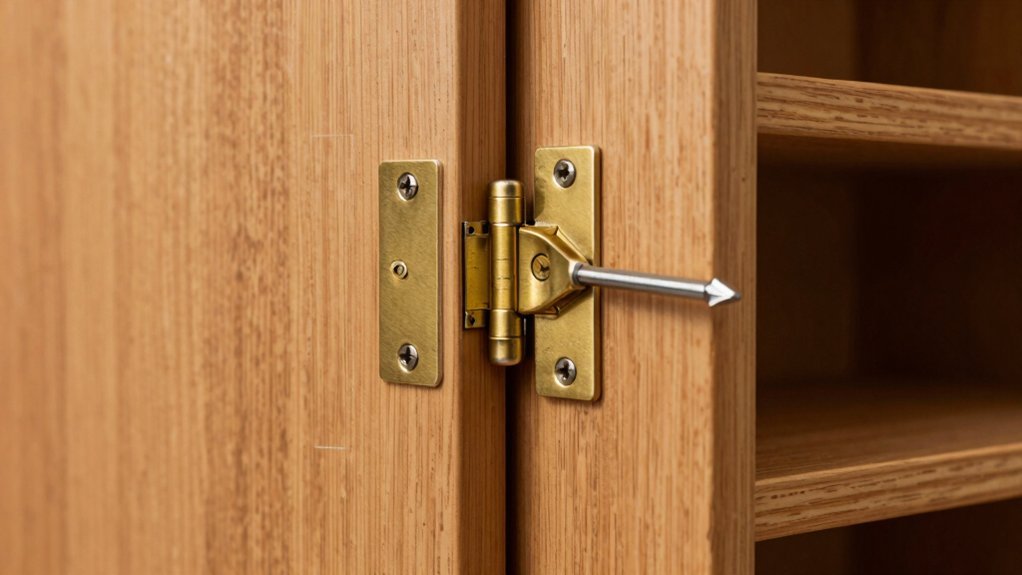
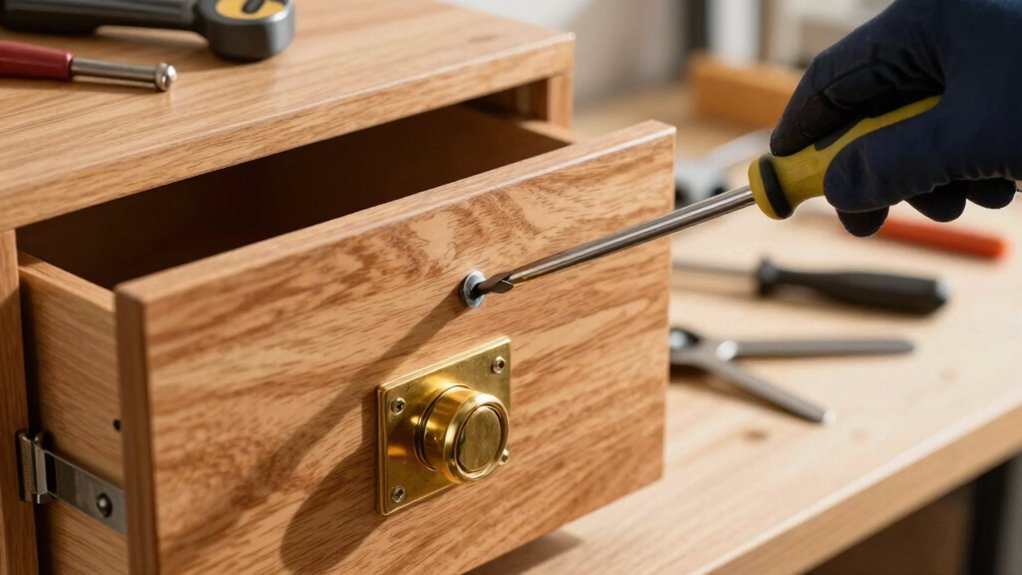
Pick a latch that matches your door’s weight, material, and environment: plastic or light‑metal for under 50 kg, stainless steel or brass for heavy or humid areas. Choose operation style—push‑to‑open for handle‑free cabinets, magnetic for quiet, no‑moving‑parts closures, turn‑butterfly for vintage look, or roller/grab for travel‑cabinet durability. Align it with your hinge type and soft‑close system, then secure with tamper‑resistant screws. Follow the installation steps to guarantee proper alignment and smooth operation, and you’ll uncover deeper details on each latch type.
How to Choose the Right Cabinet Door Latch for Your Project
When you start a project, first assess the door’s weight, size, and type—swinging, sliding, or flap—so the latch you pick can handle the load and motion. Then match the latch material to the environment: stainless steel for kitchens or RVs, brass for vintage looks, and NSF‑certified options for food service. Choose an operation style that fits the design: touch latches for minimalist cabinets, pull latches for toolboxes, or slide‑bolt latches for secure sliding doors. Consider tool integration during installation; surface‑mount magnetic catches need only a drill, while concealed touch latches require precise alignment of spring mechanisms. Finally, verify that the latch aligns with your security needs and aesthetic preferences, ensuring a reliable, seamless fit. Slidebolt latches are especially popular in rustic or farmhouse‑style cabinets. For high‑traffic areas, prioritize locks with a tamper‑resistant design to deter forced entry. Also, review the cabinet’s load capacity to ensure the latch can support the door’s weight over time. Selecting the right drawer configuration can further enhance functionality and ergonomics.

Material : Stainless Steel

【Quality 4" Barrel Bolt】 Solid T-304 premium-grade stainless steel for protect against corrosion & rust.
Key Factors for Selecting a Cabinet Door Latch
To pick the right cabinet door latch, start by matching the material, environment, load‑force, security level, and dimensions to your specific application. First, assess material durability: zinc alloy works indoors, stainless steel handles humidity and outdoor corrosion, while brass or steel survive heavy wear. Consider cost efficiency—plastic latches are cheapest for light loads, but stainless steel multi‑point locks justify higher price for heavy‑duty or high‑security needs. Next, evaluate the environment: bathrooms and kitchens demand rust‑resistant finishes; coastal areas need marine‑grade coatings. Check load‑force limits; under 50 kg you can use plastic or small metal latches, over 100 kg requires robust steel models. Finally, verify dimensions and mounting style to guarantee proper fit without redesign. Properly prepare the surface before installation to ensure optimal adhesion and alignment. Selecting the appropriate lock type, such as a key lock or electronic lock, further tailors security to the cabinet’s intended use. For maximum protection, install a reinforced hinge to prevent forced entry.
Soft‑Close Compatibility: Matching Latches to Hinges and Hardware
Choosing a latch that works with a soft‑close hinge starts with confirming the hinge type and its mounting style. Check whether the hinge is a clip‑on, inset, or European model, then verify the latch‑hinge alignment required for smooth operation. If you’re keeping existing hinges, look for retrofit‑adapter compatibility; many soft‑close add‑on adapters clip onto Blum or similar hinges without full replacement. Measure the door‑to‑frame gap—soft‑close hinges catch the door about two inches from the frame—so the latch engages after the hydraulic dampening begins. Install the adapter, drill the recommended 35 mm holes, and tighten screws after a test closure. Reduces noise by ensuring the latch engages after the door has slowed. Finally, re‑attach the door, confirm silent, gentle shut, and adjust the latch if needed for perfect alignment. Check hinge level before final tightening to avoid sagging. For optimal performance, follow the hinge adjustment steps outlined in the guide.
Push‑to‑Open Cabinet Door Latches: Seamless, Handle‑Free Operation Explained
Looking for a cabinet that opens with a simple press? Push‑to‑open latches give you that seamless, handle‑free experience. The spring‑loaded plunger inside the latch releases the door the moment you press it, so you get instant access without fiddling with knobs. Install the unit inside the cabinet, align the strike plate, and test the magnetic hold to make sure the door stays shut when not pressed. The aluminum body provides durability, while the lightweight plastic components keep the overall weight low. This design supports Push‑to‑open ergonomics, letting you open drawers with a fingertip tap, and it contributes to Minimalist hardware aesthetics by hiding all hardware from view. The result is a clean, modern look and effortless operation. For best results, choose a latch with a strong holding strength that matches your cabinet’s weight. Consider the 18‑lb rating for heavier doors to ensure reliable closure. Modern security standards also recommend using latches with tamper‑resistant screws for added protection.

Effortless Opening: No more fumbling with handles or knobs—they’re totally unnecessary! Our push-to-open system lets you get into your cabinets, drawers, cupboards, wardrobes, and dressers (works for medium-sized doors) in a flash. Enjoy a clean, seamless look—zero visible hardware, period

Push to Open: No more knobs or handles needed! Our push to open system uses a spring-loaded plunger to create a quick pop open while pressing the door. Perfect for kitchen cabinets, drawers, cupboards, wardrobes, and dressers

Easy to Install White Magnetic Catch
Magnetic Cabinet Door Latches: Minimal Moving Parts & Quiet Closures
If you want a cabinet that closes silently and stays shut without the fuss of springs or hinges, magnetic latches are the perfect solution. Their Rare Earth neodymium magnets deliver strong pull force while keeping moving parts to a minimum, so you get quiet closures and simple maintenance. To install, drill holes in the frame, screw the plated magnet in place, then peel‑off the 3M VHB adhesive and stick the metal strike to the door. The recessed washer lets the screw head sit below the contact area, ensuring a flush look that enhances magnetic aesthetics. Choose a stainless‑steel version for extra latch durability, and you’ll have a sleek, reliable closure for kitchens, wardrobes, or display panels. Ensure the screw depth is correct to prevent the magnetic unit from becoming loose. Child‑proof cabinets benefit from this design, as the strong pull force resists tampering by curious hands. The holding strength of neodymium magnets can be adjusted by selecting different grades to match varying door weights. For high‑traffic areas, consider a lock with a tamper‑resistant design to further enhance security.
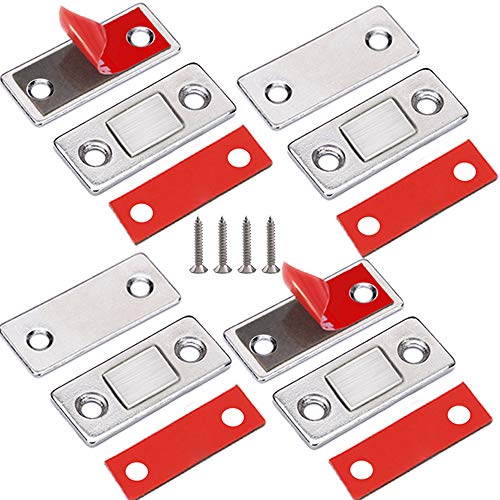
Powerful Magnetic Force 10 LBS: This magnetic door catch houses a single magnet to hold the constantly opening kitchen cabinet doors or drawers closed, suitable for using on the door which the latch or hinge is useless.

Magnetic Door Catch engineered for a seamless fit, this magnetic catch ensures the smooth operation of doors and drawers.
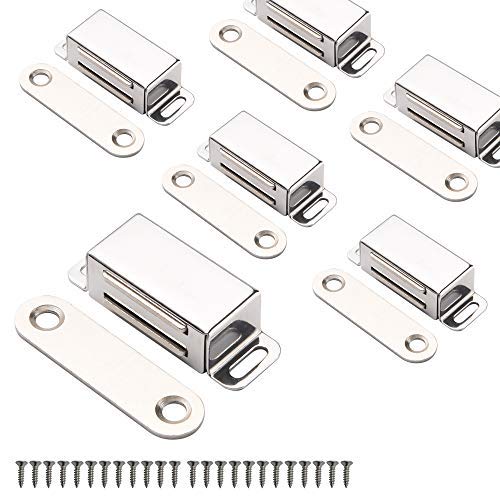
Magnetic Door Catch engineered for a seamless fit, this magnetic catch ensures the smooth operation of doors and drawers.
Draw Cabinet Door Latches: High‑Security Face‑Mounted Solutions
When you need a cabinet that stays shut under heavy use and resists tampering, a draw latch offers a high‑security, face‑mounted solution. First, align the base on the door face and the keeper tab on the frame, then secure both with screws—this simple attachment works on wood, metal, or plastic. Choose a latch with material reinforcement to handle vibration and repeated pulls. The lever arm’s ergonomic‑design gives you a comfortable grip and tactile‑feedback, so you know exactly when it’s locked. Anti‑tamper keying options let you control access, while the over‑center tension creates a firm hold without accidental release. Install a single‑hole or multi‑point version, and you’ll get a durable, vibration‑resistant closure that lasts for years. Selecting a lock with a high strength rating ensures long‑term reliability and resistance to forced entry. For families with young children, it’s also wise to anchor the cabinet to the wall to prevent tipping. Heavy‑duty hinges provide additional reinforcement for the latch assembly.
Turn & Butterfly Cabinet Door Latches: Vintage‑Style Mechanics for Classic Cabinets
After securing a cabinet with a draw latch, you might want a closure that adds a period, while still offering sturdy performance. Turn latches consist of a catch, body, and a turn piece that pulls a spring‑loaded bolt into the catch, locking the door. They mount on the front and need a manual turn each time you close. Choose a butterfly latch when you need extra durability; its hinged turn piece sits flush, resists vibration, and holds heavier doors. Both styles come in Victorian hardware designs, often cast in brass finish for a classic look. Install them surface‑mounted for quick setup, and enjoy reliable, deliberate latching that matches vintage‑style furniture. For a seamless installation, follow a clear step‑by‑step guide that outlines tool preparation, precise measurement, drilling, and testing. Their modular flexibility also allows easy integration with various cabinet configurations. Consider the weight capacity of each latch to ensure it can support the door’s size and material.
Roller & Grab Cabinet Door Catches: Smooth, Heavy‑Duty Holds for Travel Cabinets
Because travel cabinets endure frequent opening and closing, you need a latch that stays secure without sacrificing smooth operation. Roller & grab catches use spring‑loaded rollers inside the cabinet and a strike clip on the door. The rollers glide into the strike, creating a two‑fingered grip that clamps the door shut, even if hinges loosen. Choose a single roller for light‑duty travel cabinet doors or a double roller for a heavy‑duty hold when you need extra strength. Install the catch flush with the face frame, mark and screw the holes, then position the strike clip between the rollers on the door. Use short screws to avoid penetrating the door front, and adjust with finger pressure until the door closes flush. This system delivers smooth, reliable closure for any travel cabinet. Broken spring can be compensated by the roller catch.

Package Includes: 2 x double roller catch with mounting screws

Satin nickel finished steel housing

Package Includes: 10 x double roller catch with mounting screws
How to Install and Troubleshoot Your Cabinet Door Latch
Start by loosening the cabinet face frame just enough to slip the roller catch into place, then tighten the two mounting screws so the catch sits flush. Hold the catch flush, mark screw holes, and fasten it with two screws. Slip the latch between the rollers, close the door, and mark the latch’s screw holes from inside. Remove the latch and secure it to the door with short screws that won’t poke through the front. Use these installation tips for magnetic catches: position countersunk neodymium magnets, drill low‑torque, keep a ⅛‑inch gap from the back, and pair opposite poles. Follow the troubleshooting guide: adjust alignment until the door closes fully, test magnet strength, and use a drill sleeve to avoid over‑drilling. Tighten all screws after confirming smooth operation. The roller catch replaces broken hinge springs and provides a reliable closure without replacing the hinges.