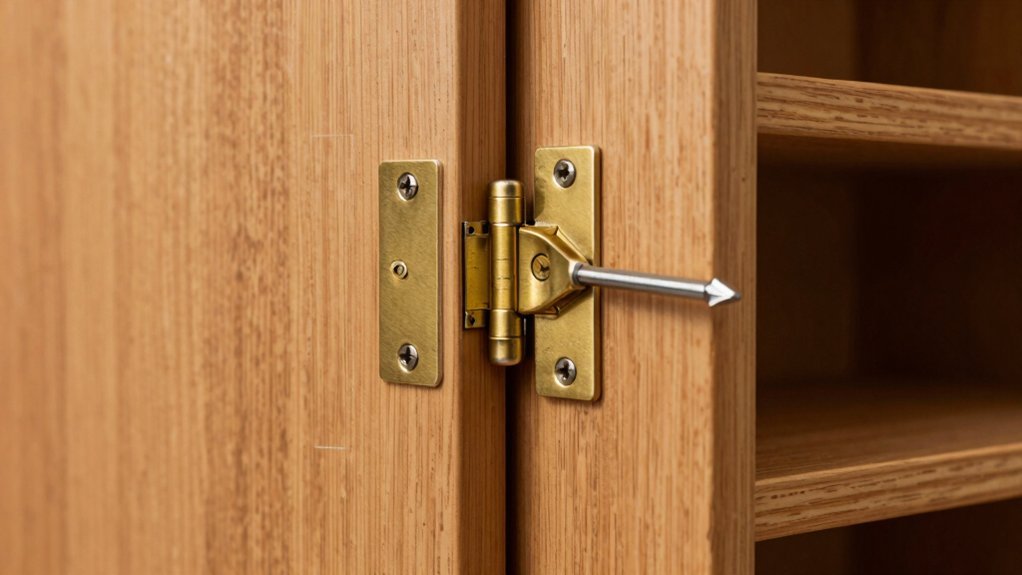
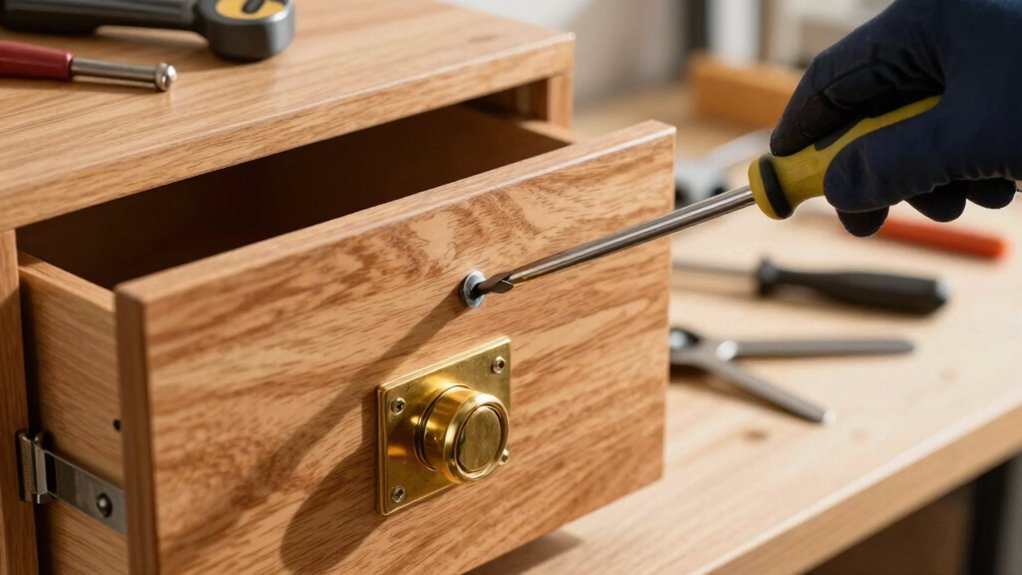
First, gather a Phillips screwdriver, a flat‑head, and a small level. Loosen the three adjustment screws—top, middle, and bottom—about a quarter turn counter‑clockwise, then slide the hinge plate while the door stays closed to raise or lower the edge. Tighten the middle screw to lock the vertical position, use the front screw to shift the door left or right, and turn the rear jacking screw to set the depth. Check gaps with a level, tighten all screws securely, and test the swing; the next steps will show you how to troubleshoot binding and fine‑tune multiple doors.
What Are European Cabinet Hinges?
When you choose a European cabinet hinge, you’re opting for a concealed, cup‑type mechanism that stays hidden once the door closes. This hardware features a 35 mm cup mortised into the door and an arm that snaps onto a mounting plate inside the cabinet, giving you a clean face and smooth swing. European hinge styles cover full‑overlay, partial‑overlay, inset, and even bifold or glass applications, all using the same hidden hardware concept. The design lets you adjust vertical, horizontal, and depth positions after installation, so you can fine‑tune the reveal on every edge. Because the mechanism stays inside the cabinet, it resists dirt and moisture, low maintenance and, you can replace a faulty arm without a professional. This modular, low‑profile system is ideal for frameless kitchens and modern furniture where aesthetics and precision matter. Soft‑close hinges further enhance usability by damping the door’s motion, reducing noise and wear. Selecting the right cabinet hinges also involves considering load capacity to ensure durability over time.
Gather the Essential Tools and Safety Tips
Since European hinges hide their mechanism inside the cabinet, you’ll need a few specific hand tools to fine‑tune them without risking damage. Grab a Phillips‑head screwdriver for most screws, a Posi Drive for cam adjustments, and a flat‑head for any odd fasteners. Keep a wrench handy for tapping modifications, but skip power drills—manual torque gives you feedback and protects hinge maintenance. For occasional pocket work, a 9/32‑inch drill bit or spade bit (1‑3/8 in) works, but use a drill press for precision. Prioritize tool safety: wear gloves, secure the cabinet, and work outside the frame when possible. Loosen back‑plate screws, check for gaps, and tighten locking screws firmly after each tweak. This setup guarantees smooth hinge maintenance without over‑tightening. Accurate millimeter measurements are essential for proper alignment. Adding an extra hinge on wider doors can greatly improve durability. three hinges help distribute weight evenly and prevent sagging. Understanding the different cabinet door latch types helps you choose the right hardware for your project. Properly tightening screws prevents the hinge from loosening over time.
Perform the Vertical (Up‑Down) Adjustment Correctly
If you want the cabinet door to sit perfectly level, start by loosening the vertical adjustment screws just enough to let the hinge plate slide—about a quarter turn counter‑clockwise for each top and bottom screw and a slight turn on the center screw of a six‑way hinge. Keep the screw torque low; you don’t want them fully loose, just enough to create hinge clearance for movement. With the door closed, lift it gently to raise or press down to lower, then slide the hinge plate until the top edge aligns with the neighboring door. Use a small level to check precision, then hand‑tighten the screws clockwise while holding the door in place. Re‑check the level and repeat if needed, ensuring even vertical alignment before moving on. The center screw can be loosened to allow the door to slide forward or backward for fine‑tuning the seam. For a smoother operation, consider applying a thin layer of lubricating oil to the hinge pivots before adjusting. Properly aligning the hinges prevents door sagging and ensures a long‑lasting, professional finish. Selecting the right hinge type, such as a soft‑close hinge, can further enhance durability and user experience.
Align the Door Horizontally With the Front Screw
Even though the door may already be level, you’ll still need to fine‑tune its left‑right position using the front screw on each hinge arm. Grab a Phillips‑head screwdriver or the proper hex key—your alignment tools—and set the door open for easy access. Turn the front screw counter‑clockwise to shift the door left, clockwise to shift it right, watching hinge clearance as you go. Use torque control: apply just enough screw torque to move the leaf without stripping the head. Follow the adjustment sequence, moving top and bottom hinges together, then close the door to check door alignment. Repeat tiny turns until the door flush with the cabinet frame and gaps are even. Keep adjustments incremental to avoid over‑tightening. The rear screw also lets you set the gap between the face frame and the door. Properly measure door gap before starting to ensure even spacing. Remember to verify that the screw hole alignment matches the handle placement for a clean finish. Use a level tool to confirm the door remains perfectly horizontal after each adjustment.
Set European Cabinet Hinge Depth With the Rear Jacking Screw
When you need the door to sit flush with the cabinet frame, start by locating the rear jacking screw on each hinge and turn it clockwise to bring the door closer, or counter‑clockwise to pull it away. Open the door, grab a Phillips‑head screwdriver or the appropriate Allen key, and loosen the door screw just enough to move. Turn the rear screw in small increments, checking the gap after each turn. Keep the hinge finish clean; avoid stripping the head by overtightening. Adjust both top and bottom hinges equally so the door stays level. Once the door aligns, retighten the screw securely. Test the swing, then verify the door sits evenly against the frame without binding. All adjustable screws are located on the cabinet side of the hinge. Properly aligned hinges also enhance the cabinet’s overall durability and load capacity. Consider the security lock feature when choosing a cabinet for high‑value storage. Selecting the appropriate hinge type ensures optimal performance and aesthetic consistency.
Troubleshoot Common Gap and Binding Problems
After setting the hinge depth with the rear jacking screw, you’ll likely notice gaps or binding as the door swings. First, check screw spacing; uneven spacing creates a 2‑3 mm gap at the top or side and causes the leaf to rub. Tighten or loosen the front screws in small increments, watching the gap close evenly. If the door still binds, examine hinge clearance: oversized heads or mis‑aligned mortises push the leaf against the frame. Replace oversized heads with smaller ones, and trim any deep recesses that force the hinge out of plane. Add thin steel shims behind the hinge leaf on the side that’s too close to the rabbet. Finally, wipe rust and debris from pins; a clean pin restores smooth movement without extra clearance. Adjust the back screw to relieve tension and prevent the door from springing back. Use a torque wrench to ensure screws are tightened to the proper specification. For maximum protection, consider installing a reinforced strike plate to prevent forced entry. Choose the appropriate hinge type and size based on the door’s weight and material to avoid premature wear and load capacity issues.
Fine‑Tune Multiple Doors for Seamless Alignment
Start by loosening the top hinge mounting screws on each door just enough to let the frame slide vertically, then use a carpenter’s level to line them up plumb; once the tops are even, tighten those screws, move to the bottom hinges, and repeat the process so the doors share a uniform door and a seamless seam. Next, set the door jack to lift the lower edge slightly, letting you observe the overlay while you tighten hinge torque to the manufacturer’s spec. Adjust the left‑right screws in 3 mm increments, rotating clockwise for rightward movement until the edge sealing aligns across the cabinet face. Verify the uniform overlay with a straightedge, then re‑check the level and tighten all screws securely, ensuring consistent spacing and a clean, flush appearance. The three‑screw system allows precise height, left‑right, and front‑back adjustments for perfect alignment. If the drawer slides are misaligned, use a pilot hole to correct the positioning without damaging the cabinet. Selecting hinges made from high‑strength steel ensures long‑lasting performance even under heavy loads. Properly chosen hinges also consider load capacity to support heavier doors without sagging.
Lock In Adjustments and Test Long‑Term Stability
Now that the doors sit flush and the seams line up, lock the adjustments in place and check that they’ll stay that way. Tighten the middle screw just enough for up‑down movement, then re‑tighten firmly with steady pressure to avoid stripping. Clip the rear locking screw tightly after each in‑out tweak, and secure the lateral screws once left‑right alignment is perfect. Verify vertical positioning with a level, then cycle the doors several times, listening for any binding. For soft‑close hinges, loosen the extra screw minimally, test the closing motion, and guarantee the clip holds the plate firmly. Re‑check after 24‑48 hours; if you notice any long‑term drift, repeat the lock‑in steps until gaps remain consistent. The adjustable plate screw allows fine‑tuning of the door’s height to maintain uniform gaps across the cabinet face.